If you want to save space, improve access underneath vehicles, and make DIY maintenance easier, a scissor lift is often one of the best upgrades for a busy home garage workshop.
For most homeowners and enthusiasts in the UK, the best option is usually a mid-rise scissor lift because it offers a strong balance between lifting height, footprint, ease of installation, and price.
Ultimately, the right scissor lift for your garage will depend on:
- The size of your garage
- The type of vehicles you will work on
- How often you will use the lift
- Whether you need portability
- Your available ceiling height
What Is a Scissor Lift?
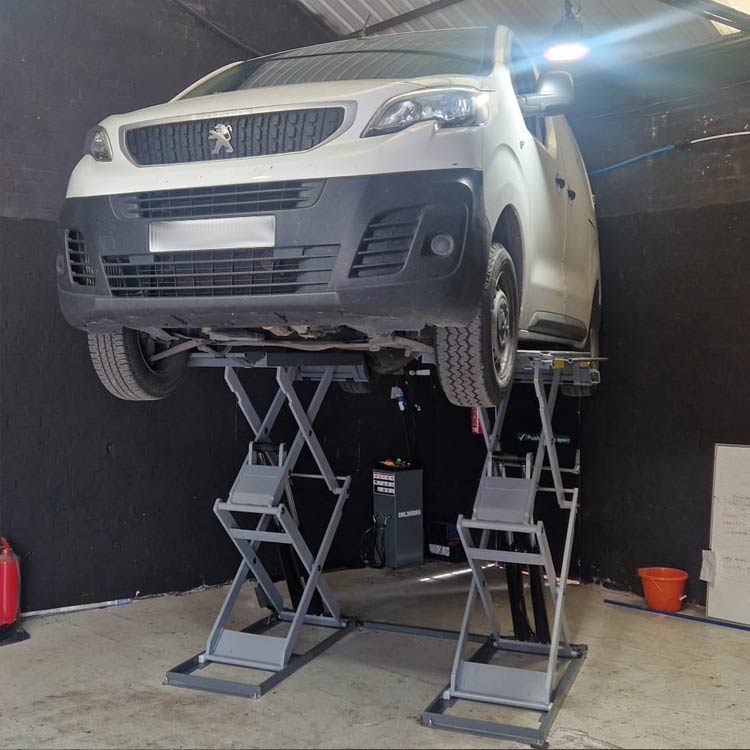
A scissor lift is a lift that works by having a concertina of crisscrossing tubes or struts that extend and contract in a scissor-like motion, providing lift to the platform. They can be operated manually, hydraulically or electro-hydraulically.
Unlike large two-post lifts, scissor lifts naturally fit tighter garages while still giving good access underneath the vehicle by nature of their construction and operation. Garage scissor lifts can be used for:
- Oil changes
- Brake work
- Suspension maintenance
- Wheel removal
- Exhaust inspections
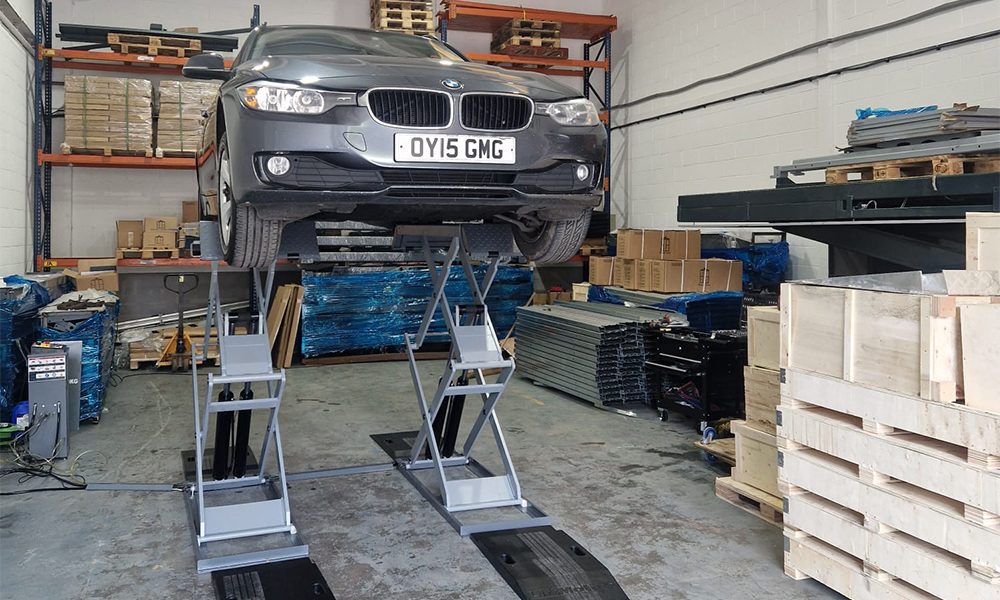
Best Types of Scissor Lift for a Garage Workshop
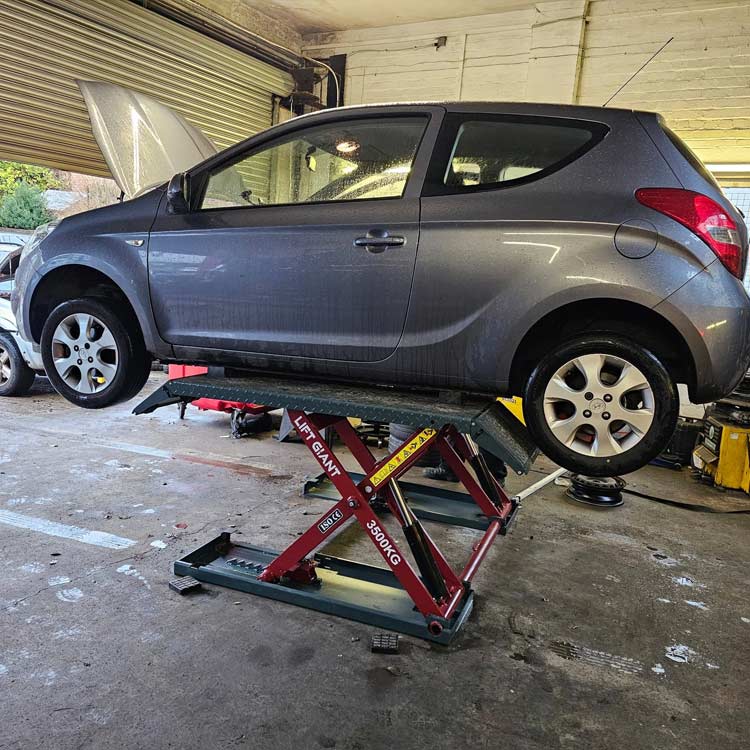
Mid-Rise Scissor Lift — Best All-Round Option
For most busy home workshops, a mid-rise scissor lift is the sweet spot as it has enough height and weight capacity without being too large and is also often portable.
Typical specs include:
- Lift height: Around 1 metre (3.3ft)
• Weight capacity: 2,700–3,500kg (5,952–7,716lb)
• Setup: Portable or semi-fixed
• Best for: General maintenance
Why It Works Well
- Easy to fit into home garages
- Cheaper than standard full-rise lifts
- Sufficient access to wheels and underside
- Usually portable
- Good height without high ceiling requirements
This makes them especially popular with DIY mechanics and car enthusiasts.
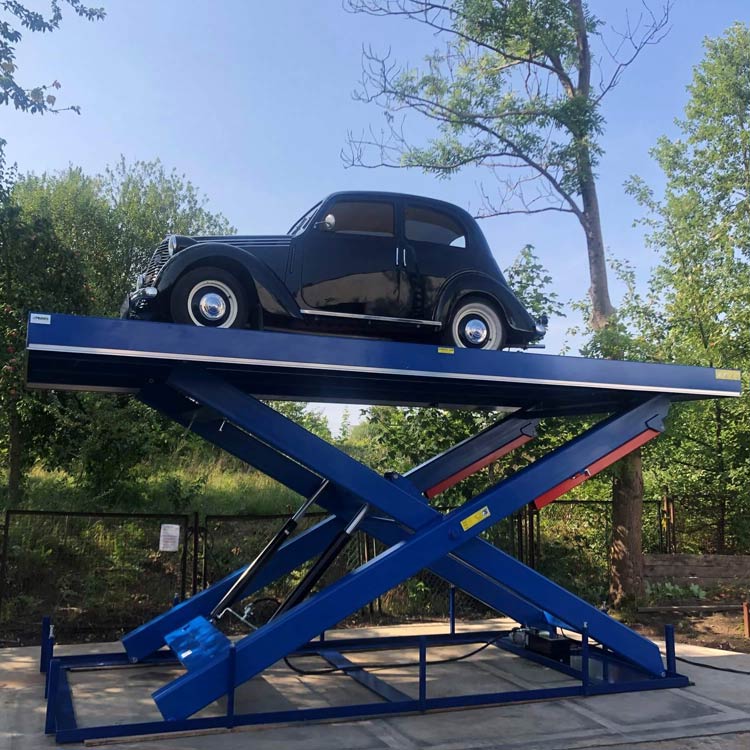
Full-Rise Scissor Lift — Best for Frequent Heavy Use
A Full-Rise Scissor Lift may be more suitable where there is a frequent need for working on the underside of vehicles, but the size and ceiling height requirements may be prohibitive for most domestic garages.
These are more common in professional garages because they:
- Lift vehicles much higher
- Improve comfort during long jobs
- Handle heavier vehicles more easily
However, they also:
- Cost much more
- Require intensive, often specialist, installation work
- Need greater ceiling clearance
For many homeowners, they can be excessive unless the garage is being used almost like a commercial mechanics workshop.
Small Scissor Lift — Best for Small Garages
If space is limited and requirements are light, small scissor lifts are worth considering.
Benefits include:
- Always portable
- Can be stored away when not in use
- Easier to move
- Lowest cost
- No installation
The trade-off is usually lower lift height and slightly reduced working access.
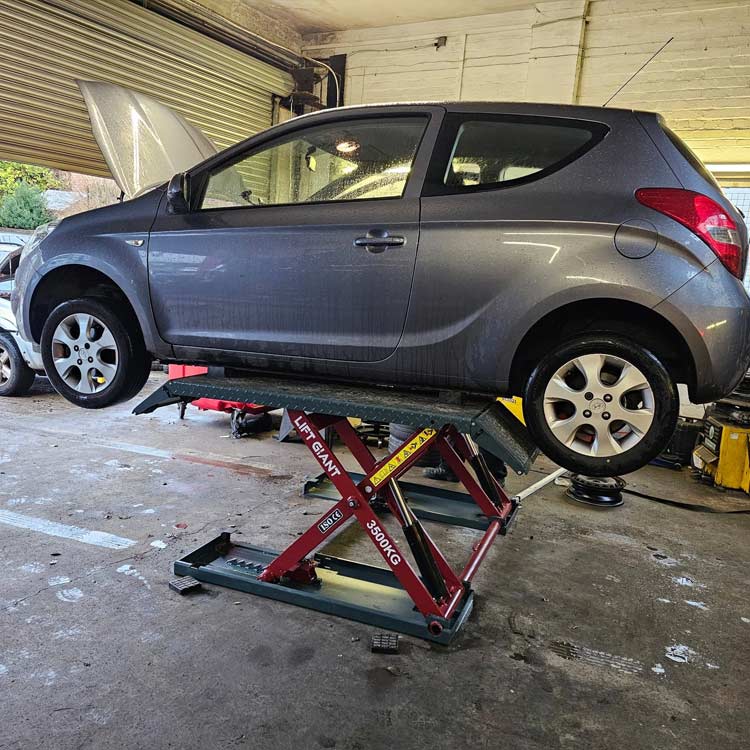
What to Look for When Buying a Scissor Lift
1. Weight Capacity
Always ensure the lift will safely handle your vehicle(s).
Typical vehicle weights:
- Small hatchback: 1,000–1,400kg (2,205–3,086lb)
- SUV: 1,800–2,500kg (3,968–5,511lb)
- Electric vehicle: Often heavier than petrol equivalents
A lift with at least 3,000kg (6,614lb) will be sufficient for almost all passenger vehicles LiftGiant’s LGX35 mid rise scissor lift goes all the way up to 3,500kg meaning that this would be comfortably capable of lifting even heavier passenger vehicles, such as Land Rovers.
2. Garage Ceiling Height
For a typical garage in the UK, a mid-rise unit will be the most practical. Unless you have an especially large / high garage, you won’t be able to have a full rise lift, however a mid-rise lift should be more than sufficient.
3. Power Supply
Different scissor lifts have different power requirements, always check the power requirements of a scissor lift before considering purchasing and ensuring that you will be able to provide this in your garage. The 2 most standard options are:
- Standard 240V domestic power
- 415V three-phase commercial supplies (unsuitable for home use)
- Vehicle Access
Think about the jobs you will actually be performing and ensure the scissor lift you are purchasing will allow for this, as different scissor lifts have different shaped platforms thus make some work easier or harder. Others may block parts of the underbody due to platform positioning.
Quick Comparison
- Mid-rise scissor lift: Best balance of price, power and practicality
- Full-rise scissor lift: Best for maximum working height but unsuitable for most homes
- Portable scissor lift: Best for space-saving garages but too weak for some modern cars
Frequently Asked Questions
Is a scissor lift good for a home garage?
Yes. A scissor lift is often ideal for home garages because it uses less space than many traditional vehicle lifts while still allowing good access for maintenance and repairs.
How much weight can a scissor lift lift?
Most garage scissor lifts handle between 2,700kg and 3,500kg (5,952–7,716lb), although heavy-duty models can exceed this.
Do scissor lifts need professional installation?
Some portable and mid-rise models are simpler to install, but many manufacturers still recommend professional setup to ensure safe operation and correct anchoring.
Is a scissor lift better than axle stands?
For convenience and working access, many users prefer a scissor lift. However, axle stands remain useful for certain repair work and additional safety support.
For most busy home garage workshops, a mid-rise scissor lift is usually the best all-round choice. It offers strong lifting capability, practical access underneath vehicles, and a more manageable footprint for standard UK garages.
If space is tight, portable models can work well, while full-rise systems are better suited to more demanding workshop environments or frequent professional-style use.