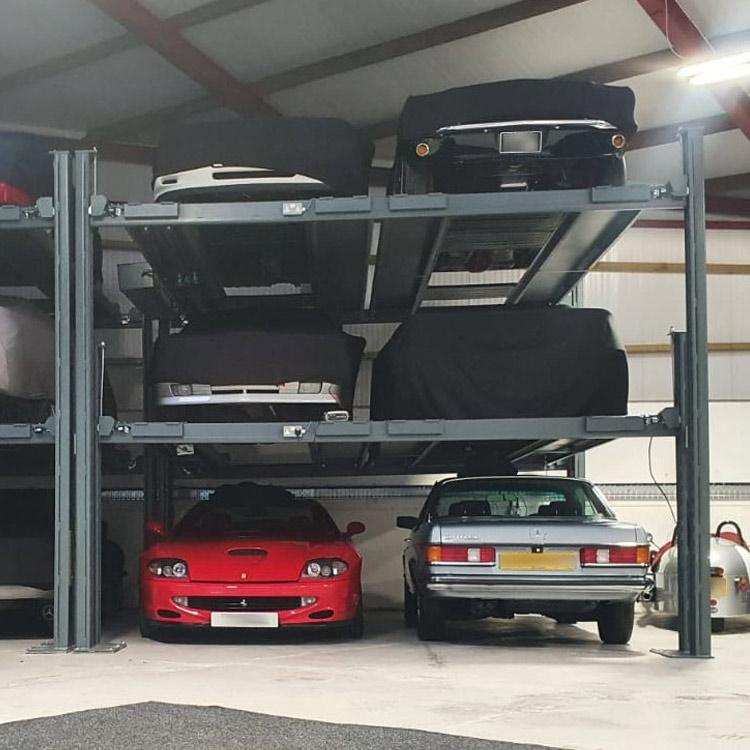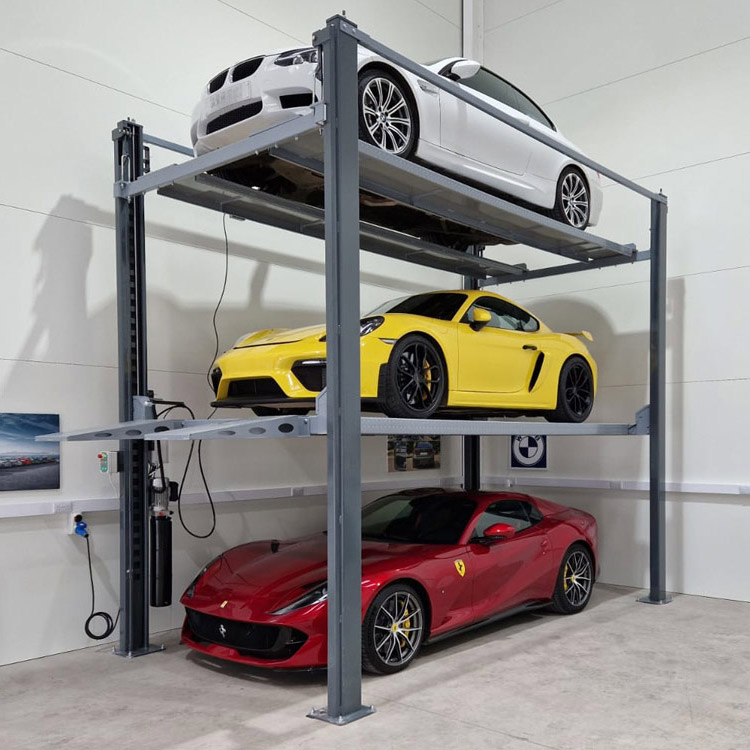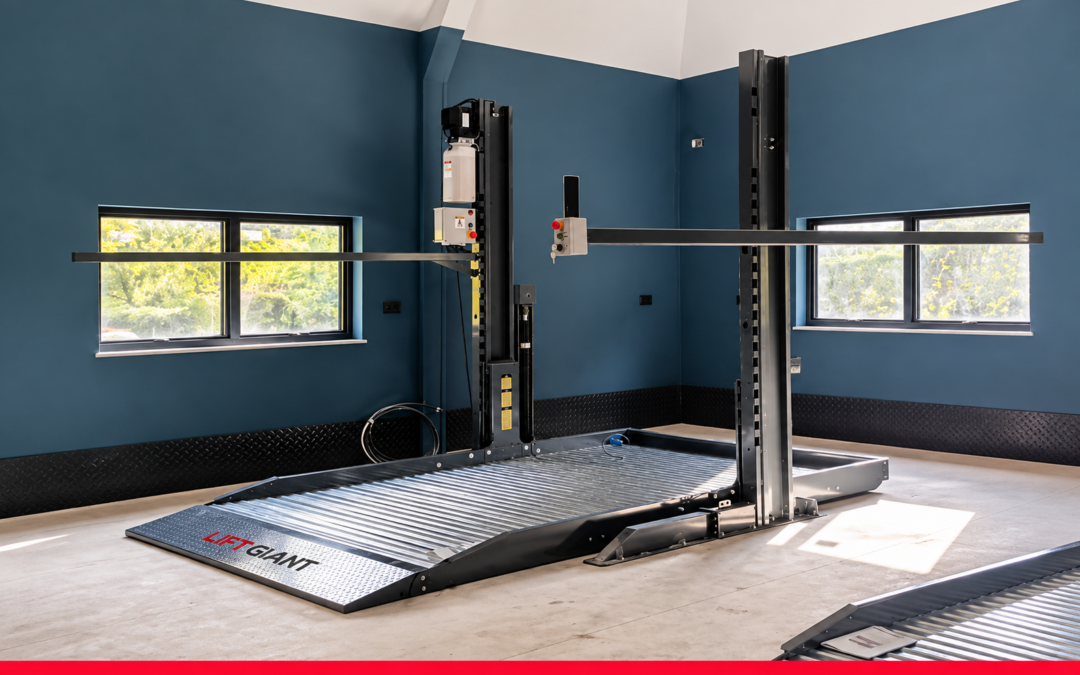
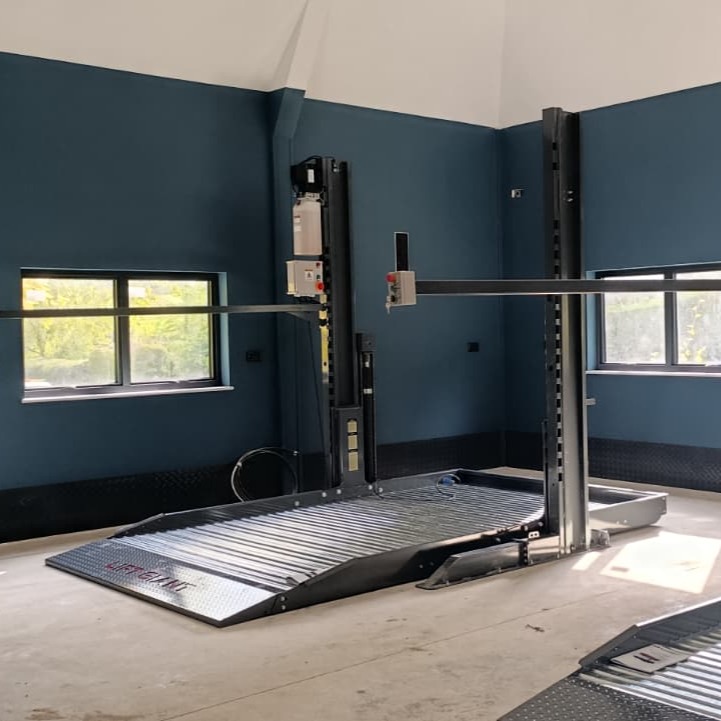
Whether you’re a car enthusiast, classic car owner or have simply invested in a car lift to increase storage options for your garage, unboxing your new car lift is an exciting time. The thought of ditching low-profile jacks, stopping the crawl on cold concrete, and finally working at eye level is enough to make anyone hit “buy” without a second thought.
However, whilst a car lift is a great investment for many, it is important to check your setup and make sure that it is the right choice for you. Most people recognise that they need to measure their garage and ensure that their car lift is going to fit, that isn’t the only thing you should be checking in your garage before you get too involved.
It is really important that you check your garage floor and make sure it is up to scratch. After all, your garage floor is going to be supporting the weight of both your new lift and your car, concentrating tons of force onto a few small mounting plates. Getting your slab thickness, concrete grade, and anchor setup right is the difference between a rock-solid workshop upgrade and a terrifying floor failure.
Concrete Base for a Car Lift – A Quick Look
- Minimum Thickness – 100mm (4″) for 4-post/scissor lifts; 150mm (6″) for 2-post lifts.
- Concrete Grade – Minimum C25/C30 (3,000 PSI) mix, fully cured for 28 days.
- Anchors – Heavy-duty wedge expansion bolts or chemical resin, set 100mm+ away from edges/cracks.
- Condition – Level, solid surface with no major cracks or voids underneath.
How Thick Does Your Concrete Slab Need to Be?
The best thing to do is speak to the team at Lift Giant about your exact setup needs so you can get tailored advice that suits you. However a depth of 100mm to 150mm (4–6 inches) is sufficient for most hobbyist setups. Never guess what your depth already is, because it isn’t unusual for a garage floor to be built with a concrete depth of 75mm-90mm.
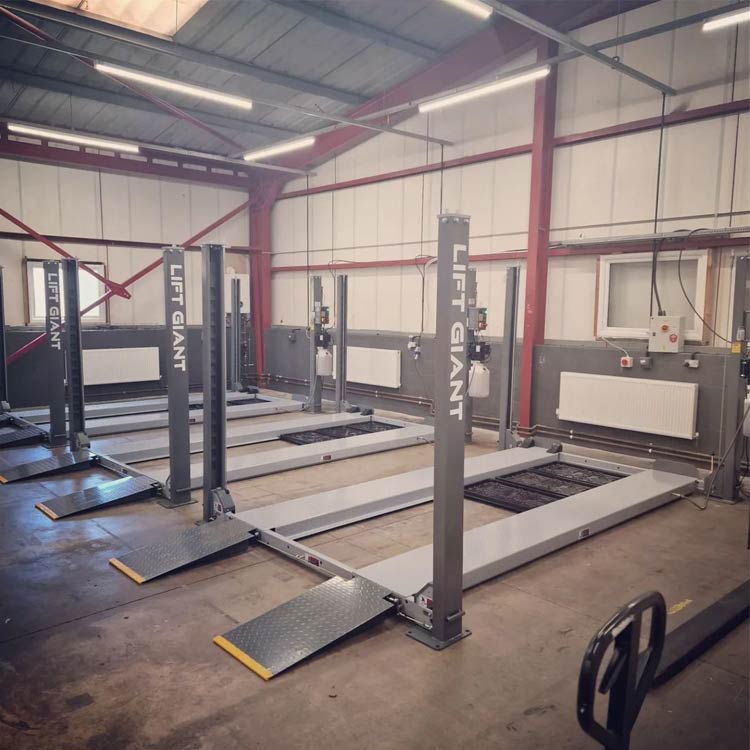
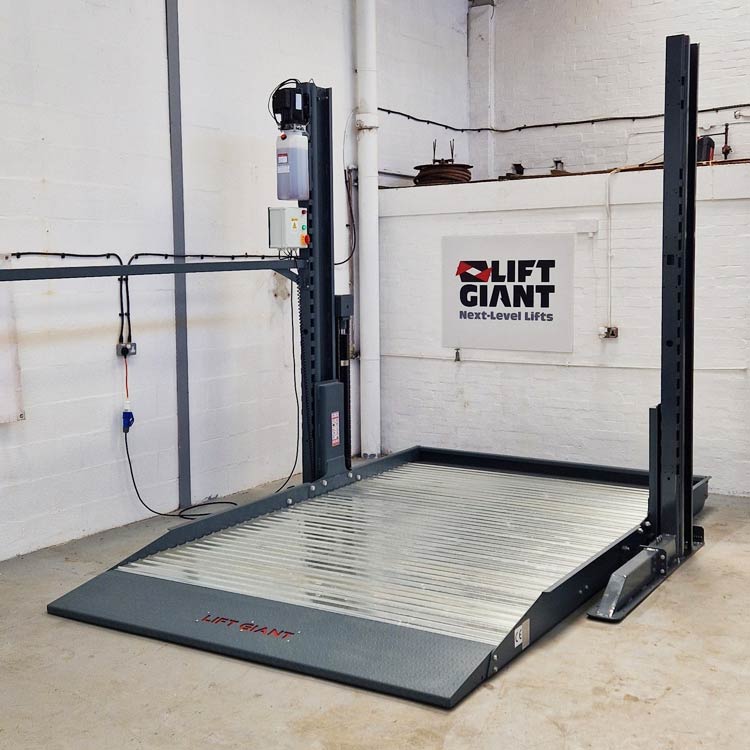
2-Post Lifts – 150mm / 6 inches minimum – Because a 2-post lift relies entirely on two small baseplates, the posts try to pull upward and outward against the floor like a giant crowbar when a vehicle is raised. You need at least 150mm of solid concrete so the expansion anchors can bite without snapping the slab.
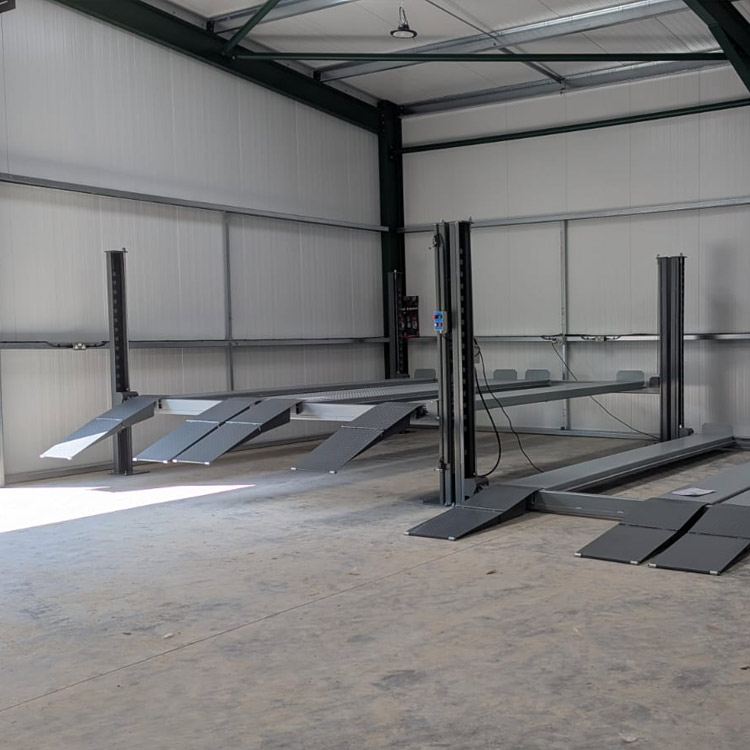
4-Post Lifts – 100mm / 4 inches minimum – These distribute the vehicle’s weight evenly across four posts. The physics here are purely about downward compression rather than prying force, so a standard 100mm slab is usually plenty.
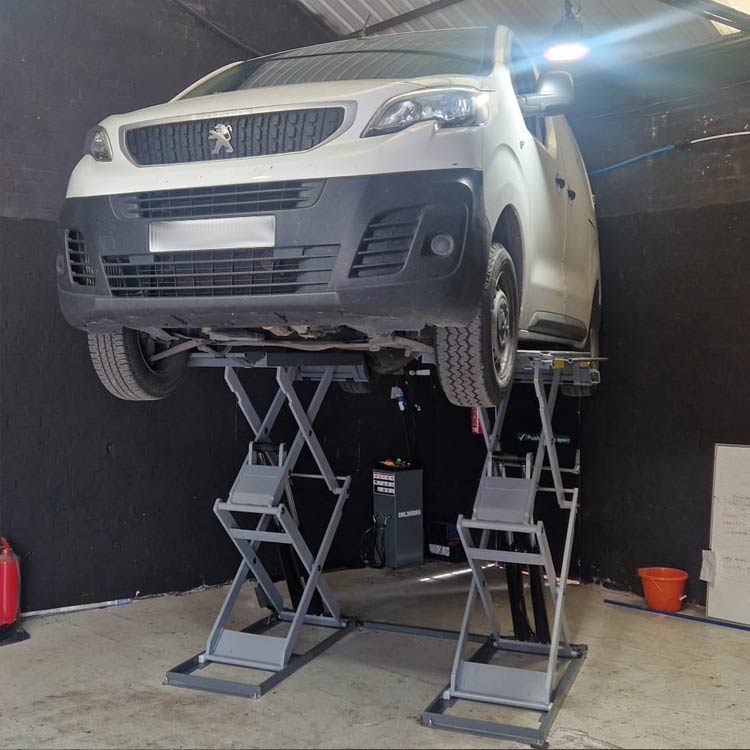
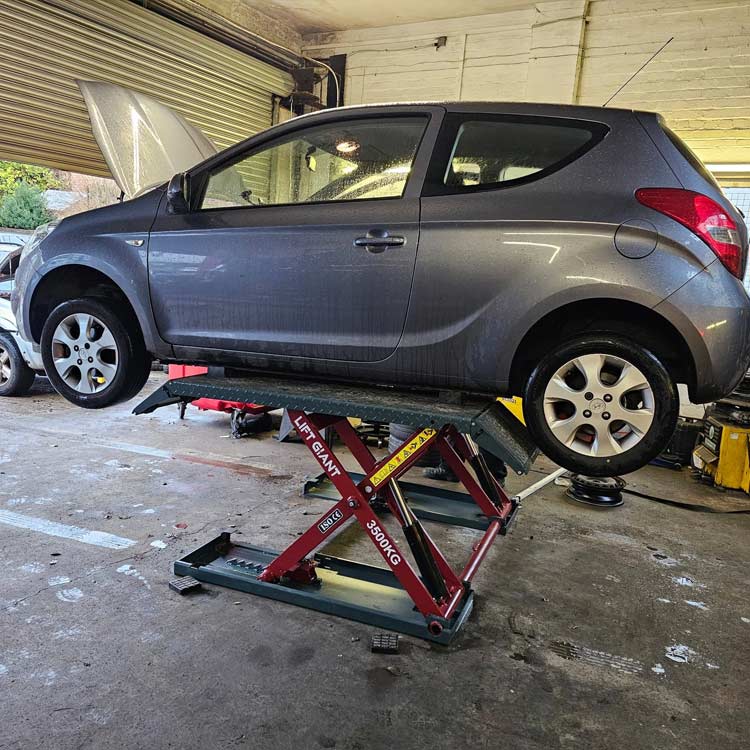
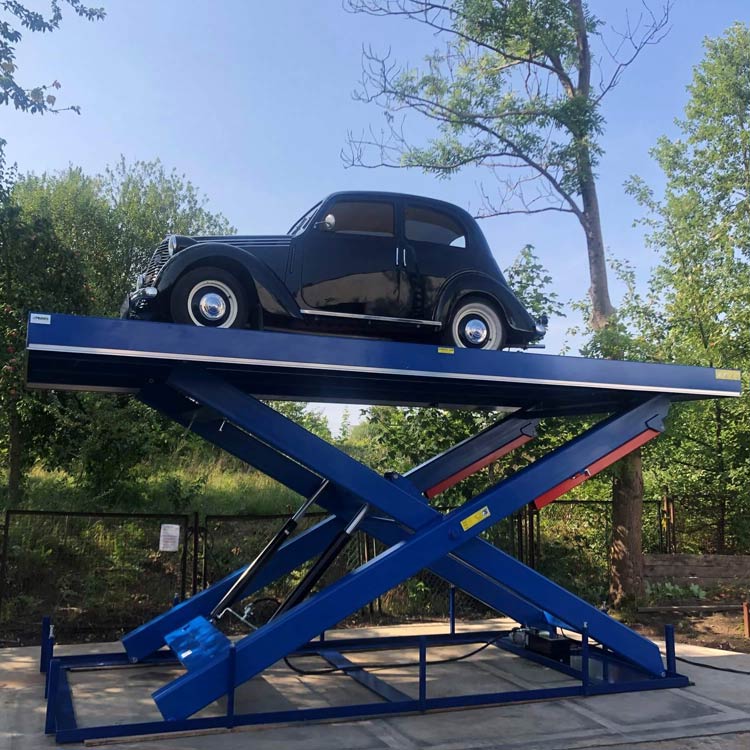
Scissor Lifts – 100mm to 125mm / 4 to 5 inches – Mid-rise and full-rise scissor lifts spread weight across long ground rails. A standard 100mm residential slab handles them fine, though 125mm gives extra peace of mind for heavy 4x4s.
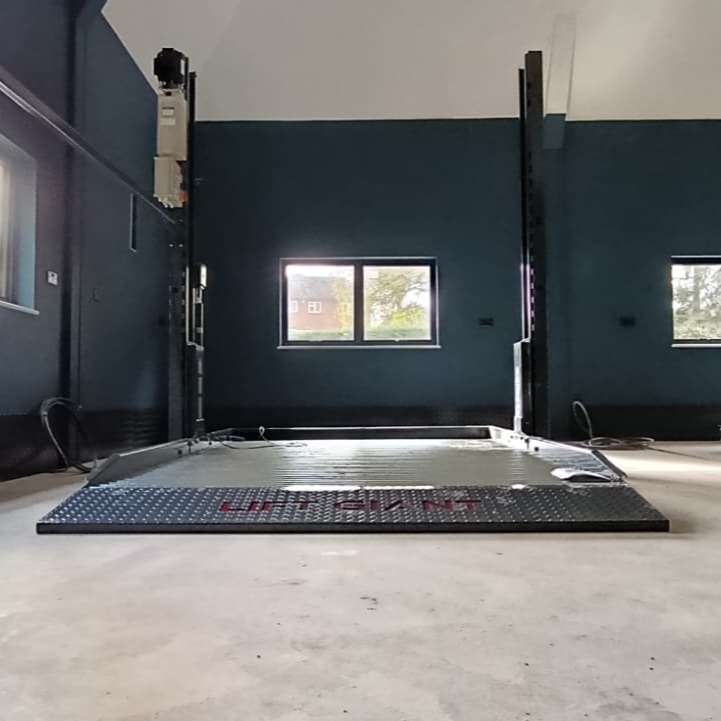
Concrete Strength: What’s C25/C30 and Why Does It Matter?
Thickness is only half the battle—you need a concrete grade of C25/C30 (around 3,000–3,500 PSI) so the anchor bolts can bite in without tearing the floor apart.
| Concrete Grade | Compressive Rating | Suitable for Car Lifts? |
|---|---|---|
| C15 / C20 | ~2,000 – 2,500 PSI | No. Typical for garden sheds and simple footpaths; too soft for anchor bolts under tension. |
| C25 / C30 | ~3,000 – 3,500 PSI | Yes. The industry standard minimum for domestic garage slabs and post anchor bolts. |
| C35 / C40 | ~4,000 – 5,000 PSI | Ideal. Heavy-duty commercial workshop standard; incredible strength and pull-out resistance. |
Installing a car lift is one of those garage projects that makes a massive difference to how you work. Ditching low-profile jacks and getting cars up to eye level saves your back and makes maintenance a whole lot easier. Just remember that a safe setup all comes down to what’s under your feet.
Taking twenty minutes to drill a quick test hole, measure your slab thickness, and check your concrete strength before doing anything else avoids major headaches down the road. Once you know the foundation is solid, you can get the posts anchored down and work under your car with complete peace of mind.
Concrete Base for a Car Lift – FAQs
How long do I need to wait after pouring new concrete before installing a car lift?
Give fresh concrete a full 28 days to cure and reach its proper load strength before drilling holes or loading up a lift.
Can I install a car lift on block paving, asphalt, or gravel?
No. Car lifts must be mounted on a solid, continuous concrete slab so the anchor bolts can bite firmly into the ground.
Do 4-post lifts always need to be anchored to the floor?
Not strictly! Many 4-posters are freestanding and offer castor wheel kits, though bolting them down gives you the ultimate peace of mind.
How do I measure my concrete floor thickness without special tools?
Drill a simple pilot hole using a masonry bit, hook a wire or tape measure underneath the bottom edge of the slab, and read the depth.