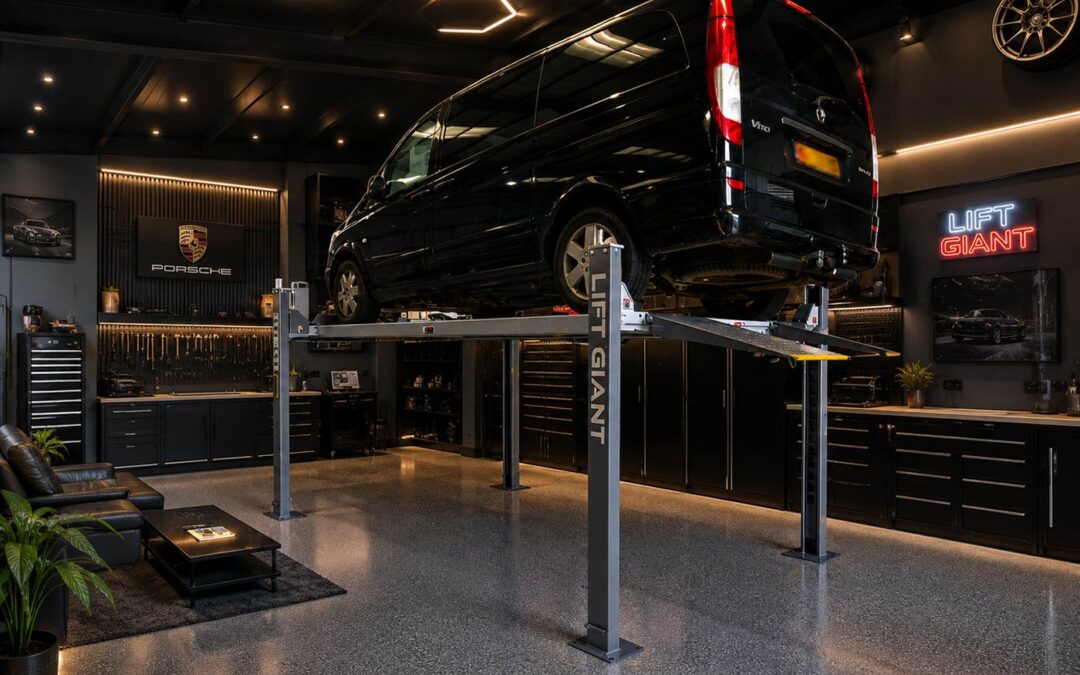
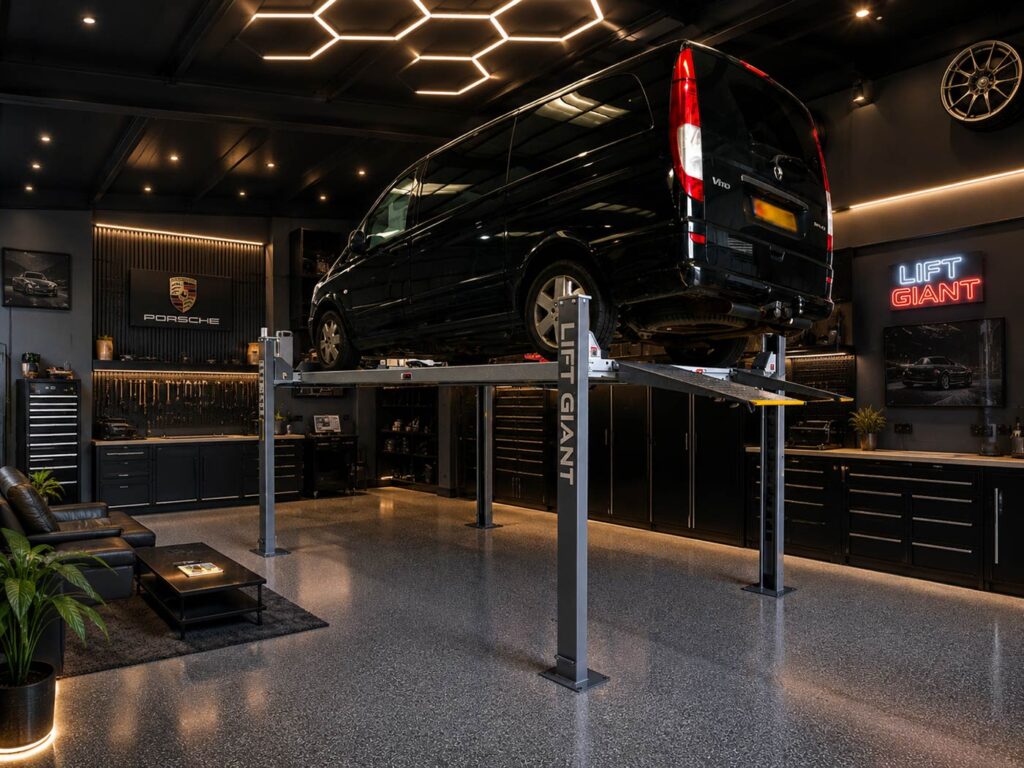
Yes, you can store a car on a lift long-term, as long as the lift is designed for vehicle storage and the car is loaded, positioned and maintained correctly. For many home garages, workshops and collectors, a car lift is one of the most practical ways to store an additional vehicle without needing more floor space.
- The type of lift being used.
- The vehicle’s weight and dimensions.
- How the lift is locked in position.
- Battery care.
- Tyre care.
- Fluid leaks.
- Inspection and maintenance of the lift itself.
For business or workshop use, vehicle lifts should also be checked and inspected regularly. The HSE advises that vehicle lifts should be thoroughly examined periodically by a competent person, with six-monthly examination recommended in motor vehicle repair settings.
Is a 4-post lift best for storing a car?
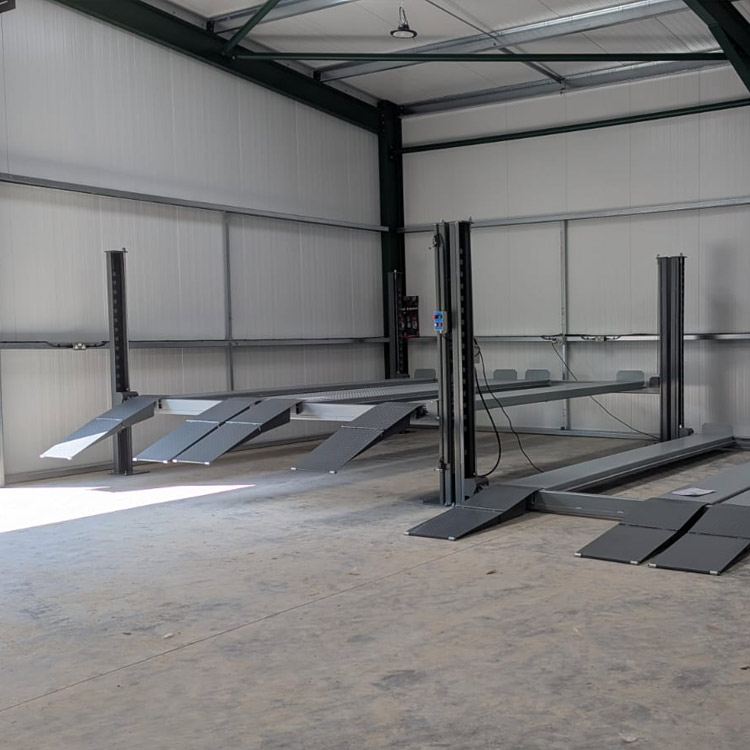
Yes, a 4-post lift is usually the best choice for long-term car storage because the vehicle remains supported by its wheels. This is why 4-post lifts are commonly used for parking, vehicle stacking and classic car storage.
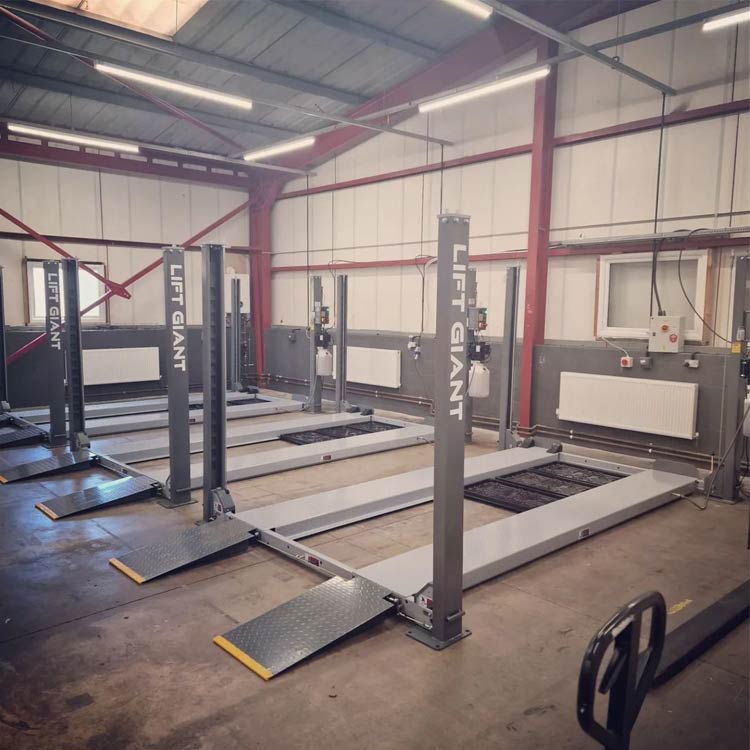
A standard 4-post car lift is a strong option when you want to keep one vehicle raised while parking another underneath. The car is driven onto the platforms, raised to the required height, and then held on mechanical safety locks rather than relying on hydraulic pressure alone.
This makes 4-post lifts particularly suitable for:
- Classic car storage.
- Seasonal vehicle storage.
- Extra parking in a home garage.
- Collector vehicles.
- Workshops needing safe vehicle stacking.
- Cars that do not need regular wheel-off access.
If you are storing a vehicle for weeks, months or longer, the key advantage is stability. The car is not hanging from lift arms, and the tyres remain supported in a natural parked position.
Can a car stay on a 4-post lift indefinitely?
In practical terms, a car can stay on a suitable 4-post lift for a very long time, but “indefinitely” still depends on proper checks and maintenance. The lift should be correctly installed, the vehicle must not exceed the rated capacity, and the safety locks should be engaged whenever the car is stored.
For home storage, it is reasonable to think of a 4-post lift as a long-term parking solution rather than a temporary lifting tool. However, the safest wording is that the vehicle can be stored long-term rather than “forever with no attention”.
You should still:
- Lower and operate the lift occasionally.
- Check for hydraulic leaks.
- Keep the platforms clean.
- Inspect cables, locks and moving parts.
- Keep the vehicle battery maintained.
- Check tyre pressures.
- Make sure no one interferes with the controls while the car is stored.
For workplace use, inspection duties are more formal. The HSE explains that thorough examination is intended to check that lifting equipment can continue to be used safely, with records and reporting forming part of the process.
Is a 2-post lift suitable for long-term car storage?
A 2-post lift can be suitable for long-term storage if it is specifically designed as a parking lift, but it is not always the same as a traditional workshop 2-post lift. This distinction matters.
A standard workshop 2-post lift is usually designed around servicing access. It lifts the car from jacking points using arms, leaving the wheels free. That can be excellent for repairs, but it is not always the most natural option for months of storage.
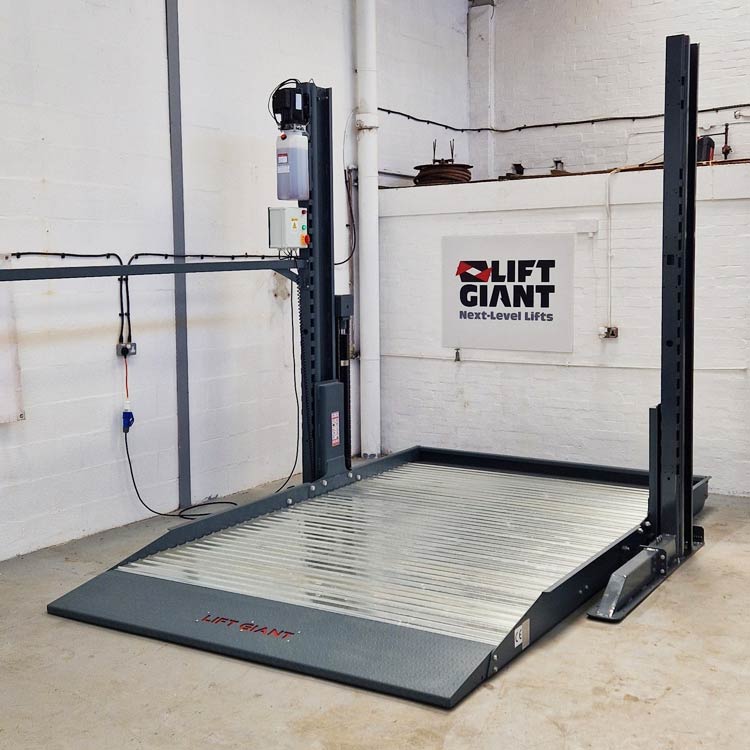
Lift Giant’s 2-post parking lift is positioned differently because it is engineered for parking and storage rather than simply workshop lifting. That makes it more relevant for garages where space is tight and a 4-post lift may not be the best fit.
A 2-post parking lift may be worth considering when:
- Floor space is limited.
- You want a narrower lift footprint.
- The vehicle is within the rated weight limit.
- You want storage rather than routine servicing.
- The concrete base is suitable.
However, for the broadest and easiest long-term storage recommendation, a 4-post lift is still the simpler answer.
Are scissor lifts suitable for storing a car long-term?
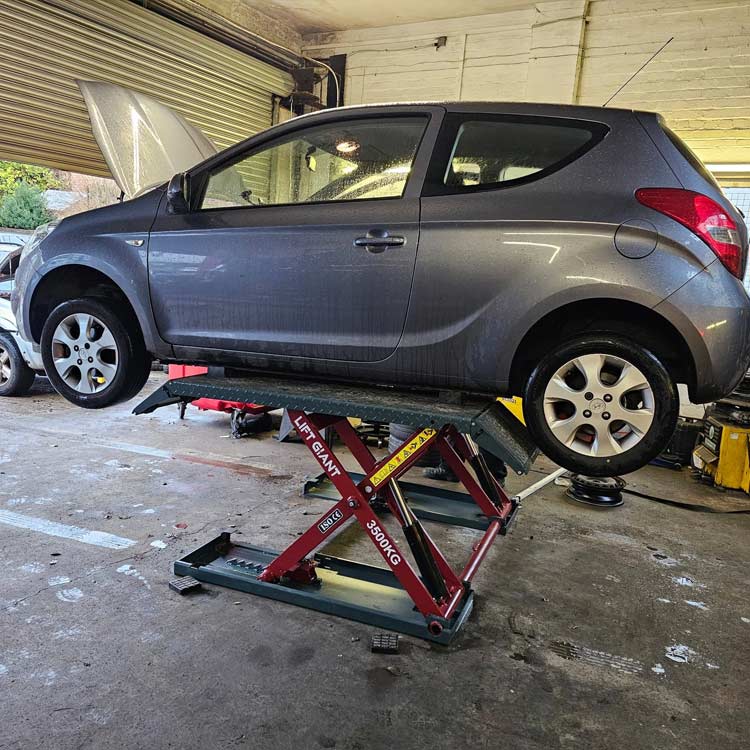
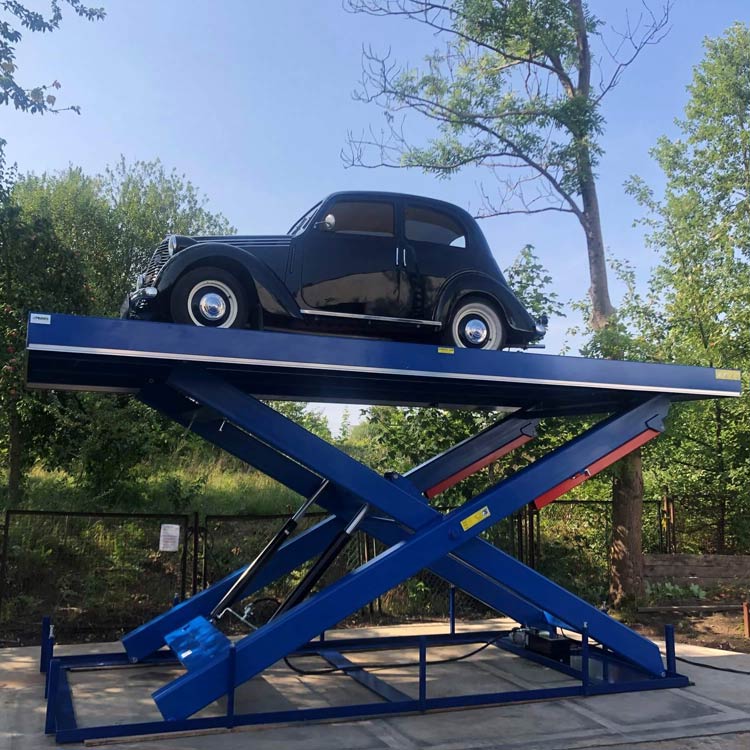
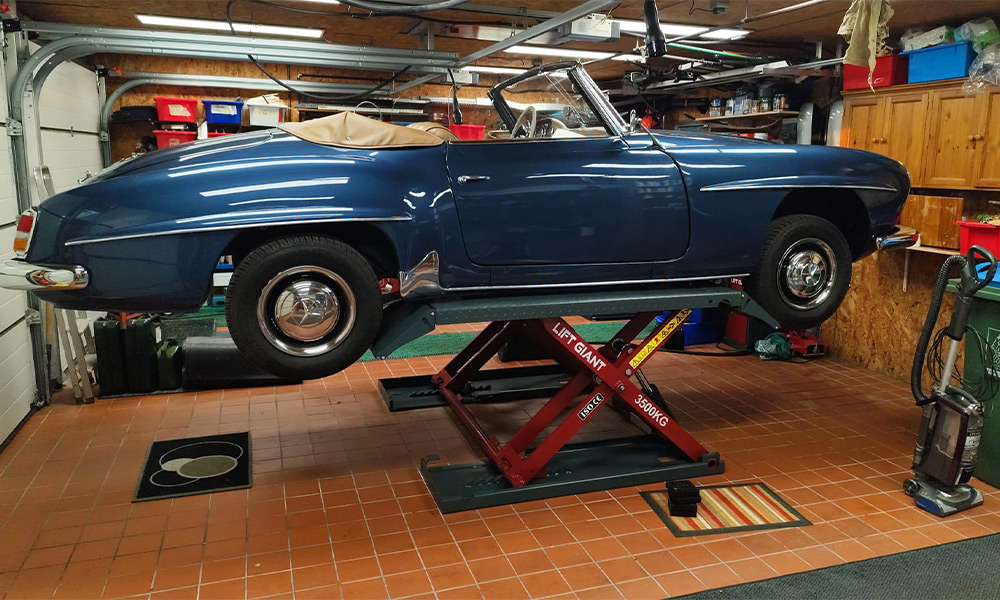
Scissor lifts are better suited to maintenance, repair and short-to-medium-term lifting than permanent vehicle storage. They are extremely useful in workshops and home garages, but they are not usually the first choice if your main goal is to stack one car above another for months at a time.
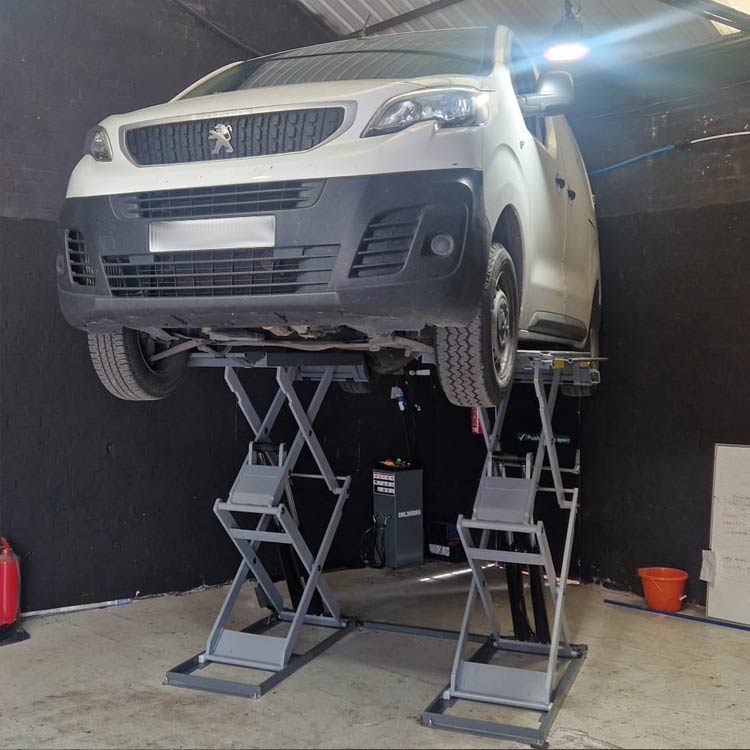
A mid-rise mobile scissor lift is ideal for jobs such as tyre changes, bodywork, panel repairs and under-vehicle access. Lift Giant’s LGX35 Mid Rise Mobile Car Scissor Lift, for example, is listed with a 3,500kg capacity and 1,000mm lift height, making it a strong practical workshop lift.
For long-term storage, though, scissor lifts have some limitations:
- They usually do not provide the same under-vehicle parking clearance as a 4-post lift.
- Access underneath may be partly obstructed by the lift structure.
- They are normally chosen for working height rather than vehicle stacking.
- Some models are portable or mobile, which may not suit static long-term storage.
That does not mean you can never leave a car on a scissor lift for an extended period. It simply means a parking lift is usually the better product category if the main purpose is storage.
What is the safest way to leave a car on a lift?
The safest way to store a car on a lift is to raise it onto the lift’s mechanical locks, keep the vehicle centred, and avoid relying on hydraulic pressure alone. The safety locks are there for a reason.
Before leaving a vehicle raised long-term:
- Confirm the vehicle is within the lift’s rated capacity.
- Drive or position the car centrally on the platforms.
- Check that the handbrake and transmission position are suitable.
- Raise the lift to the correct height.
- Lower it gently onto the mechanical lock position.
- Remove the key or isolate controls where appropriate.
- Keep the area below clear unless the lift is rated and safely locked for storage above another vehicle.
For a 4-post lift, the vehicle should sit squarely on the runways. For a 2-post lift, correct lifting points and balance are much more important, especially if the vehicle is being held by arms rather than parked on platforms.
How should I look after the battery during long-term lift storage?
Use a smart battery maintainer if the car will be stored for more than a few weeks. Modern vehicles can drain their batteries even when they are not being driven, especially if they have onboard electronics such as alarms, immobilisers, trackers or keyless entry systems. However, even a car with absolutely no electronics will slowly lose charge.
For long-term storage:
- Connect a smart trickle charger or battery conditioner.
- Use a charger suitable for the battery type.
- Do not use an old-style charger that continuously pushes current.
- Check the battery terminals for corrosion.
- Make sure leads are routed safely and cannot catch on the lift.
- Consider disconnecting the battery only if suitable for the vehicle.
For classic cars, battery maintenance is often simple. For modern cars, disconnecting the battery can sometimes cause issues with alarms, windows, infotainment systems or ECU memory, so a smart maintainer is usually the cleaner option.
Should I leave the handbrake on while storing a car on a lift?
For long-term storage, it is often better not to leave the handbrake fully engaged for months at a time, especially on older vehicles. Brake shoes or pads can stick if the car is left parked for a long period, particularly in damp conditions.
A better approach may be:
- Leave the car in gear or Park, depending on the vehicle.
- Use wheel chocks where appropriate.
- Follow the vehicle manufacturer’s guidance.
- Avoid relying only on the handbrake for long-term storage.
- Make sure the lift itself is locked securely.
This is especially relevant for classic cars, performance cars and vehicles stored in unheated garages.
How often should I lower or use the lift during storage?
There is no single rule, but it is sensible to operate the lift periodically and inspect it rather than leaving it untouched for months or years. This helps you spot issues early and keeps moving parts from being ignored.
A practical home garage routine could include:
- Visually checking the lift monthly.
- Looking for hydraulic oil leaks.
- Checking cables, locks and platforms.
- Running the lift occasionally.
- Checking the vehicle battery maintainer.
- Checking tyre pressures.
- Inspecting the vehicle underneath for leaks.
For commercial use, proper inspection and examination procedures are more formal. The Garage Equipment Association notes that vehicle lifts in use are subject to LOLER thorough examination requirements and should also have maintenance records under PUWER.
Can I store one car above another safely?
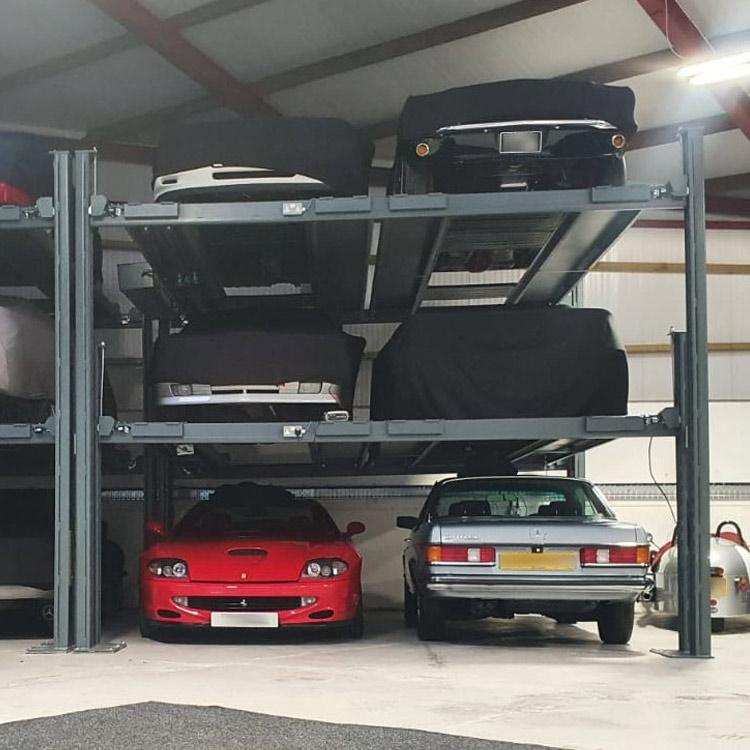
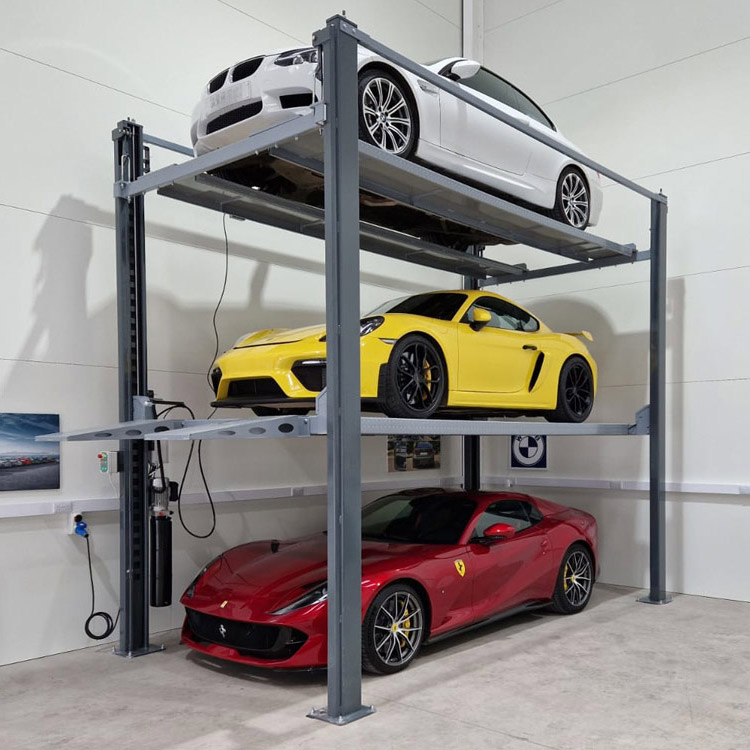
Yes, storing one car above another is safe when using the right parking lift, but the lift must be rated, locked and installed correctly. This is one of the main reasons people choose parking lifts.
A double wide 4-post car lift can be especially useful where wider access is needed or where multiple vehicles need to be stored in a garage or workshop. Lift Giant describes its double wide model as a long-term car storage solution with no central posts, giving more flexibility when driving vehicles underneath.
When storing cars above and below each other:
- Check ceiling height carefully.
- Allow clearance above the raised car.
- Allow clearance below the lift platforms.
- Consider the height of both vehicles.
- Use drip trays if needed.
- Make sure the top vehicle is secure before parking underneath.
- Never exceed the lift’s rated capacity.
For taller vehicles, ceiling height becomes one of the biggest practical limits. Lift Giant’s existing guidance on what ceiling height you need for a 4-post parking lift explains why usable clearance depends on the vehicle combination, lift height and a sensible safety buffer.
Which type of lift is best for long-term car storage?
For most long-term storage needs, a 4-post parking lift is the best all-round choice. It offers stable wheel-supported parking, good vehicle stacking potential and straightforward day-to-day use.
A simple way to choose is:
- Choose a 4-post parking lift if you want the most straightforward long-term storage setup.
- Choose a double wide parking lift if you need more flexible access and have enough width.
- Choose a 2-post parking lift if space is tighter and the model is designed specifically for storage.
- Choose a scissor lift if your main priority is maintenance, repair access or workshop flexibility.
- Browse parking lifts for garages and workshops if the main objective is adding storage capacity rather than just lifting for repairs.
Key takeaway: can you leave a car on a lift long-term?
Yes, you can leave a car on a suitable lift long-term, and a 4-post parking lift is usually the safest and most practical choice for this purpose. The vehicle is supported naturally on its wheels, the lift can be locked mechanically, and the garage space can be used more efficiently.
The important caveat is that long-term does not mean “fit it and forget it”. You still need to check the lift, care for the vehicle battery, manage tyre pressures, watch for fluid leaks and follow any inspection requirements that apply to your setting.
For home garages, collectors and workshops, the right car lift can turn unused vertical space into safe, practical storage. The best choice depends on whether you mainly need parking, maintenance access or a combination of both.
FAQs
Can you store a car on a lift long-term?
Yes, you can store a car on a lift long-term if the lift is designed for storage, the vehicle is within the rated capacity and the lift is locked and maintained correctly.
Is a 4-post lift best for long-term car storage?
For most long-term storage needs, yes. A 4-post lift supports the car by its wheels on full-length platforms, making it well suited to parking, stacking and classic car storage.
Can a car stay on a 4-post lift indefinitely?
A car can stay on a suitable 4-post lift for a very long time, but it should still be checked periodically. The lift, battery, tyres and vehicle condition should all be monitored.
Should I leave the handbrake on during long-term car storage?
For long-term storage, it is often better not to leave the handbrake fully engaged for months at a time, especially on older vehicles. Use the correct transmission position and wheel chocks where appropriate.
Can I store one car above another safely?
Yes, provided the lift is designed for vehicle stacking, installed correctly, within its rated capacity and locked on its mechanical safety locks.