We’ve been involved in installing vehicle lifts for a long time, and if there’s one question that comes up more than any other, it’s this:
“Are they actually safe?”
It’s a fair question.
You’re talking about lifting a vehicle that weighs anywhere from one to three tonnes, sometimes more, and then working underneath it. If you haven’t owned a lift before, it’s natural to want reassurance before making that investment.
The good news is that modern vehicle lifts are incredibly safe when they’re built to the correct standards, installed properly and looked after throughout their working life.
In our experience, most safety concerns don’t come from the lift itself. They come from people not understanding what actually makes a vehicle lift safe in the first place.
A Good Lift Doesn’t Rely on Hydraulics Alone
One of the biggest misconceptions we hear is that a hydraulic lift is held in the air purely by hydraulic pressure.
That’s not how a quality vehicle lift works.
The hydraulic system raises the vehicle, but once it’s in position, mechanical safety locks are designed to take over. They’re there to support the load while you’re working underneath the vehicle, rather than relying solely on hydraulic pressure.
It’s one of those things customers don’t often see, but it’s one of the reasons modern lifts are so safe when used correctly.
Safety Starts Long Before Installation
When people compare vehicle lifts, it’s easy to focus on lifting capacity, price or maximum height.
Those things matter, but they’re only part of the picture.
Before we’d consider installing any lift, we would want to know that it’s been properly tested, built to recognised safety standards and supplied with the correct certification.
Every Lift Giant vehicle lift is supplied with a Declaration of Conformity confirming it meets the relevant safety requirements, and every model is thoroughly inspected and tested before it leaves for delivery.
That’s not something customers always ask about, but it’s something they should.
Installation Is Just As Important As the Lift Itself
We often say that you can buy an excellent vehicle lift, but if it’s installed badly, you’ve immediately lost one of its biggest advantages.
Before any installation begins, there are several things that need checking.
The concrete floor needs to be suitable.
The lift needs to be positioned correctly.
Anchor points need to be installed exactly as the manufacturer specifies.
The lift then needs to be commissioned properly before it’s put into service.
These aren’t difficult jobs for someone with the right experience, but they’re important enough that they shouldn’t be rushed.
That’s why Lift Giant coordinates installations through experienced installation partners across the UK. They’ve installed lifts in everything from single domestic garages to busy commercial workshops, and understand the small details that make a difference to long-term performance.
For many customers, having the lift professionally installed gives them confidence that everything has been done correctly from day one.
Not Every Garage Is the Same
One thing experience teaches you is that no two installations are identical.
Some garages have limited ceiling height.
Others have unusual floor layouts or restricted access.
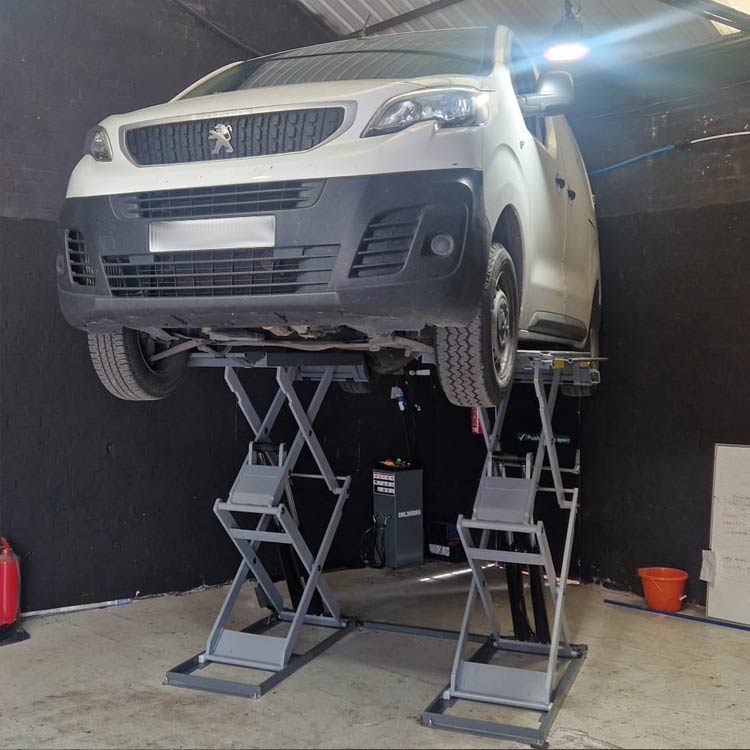
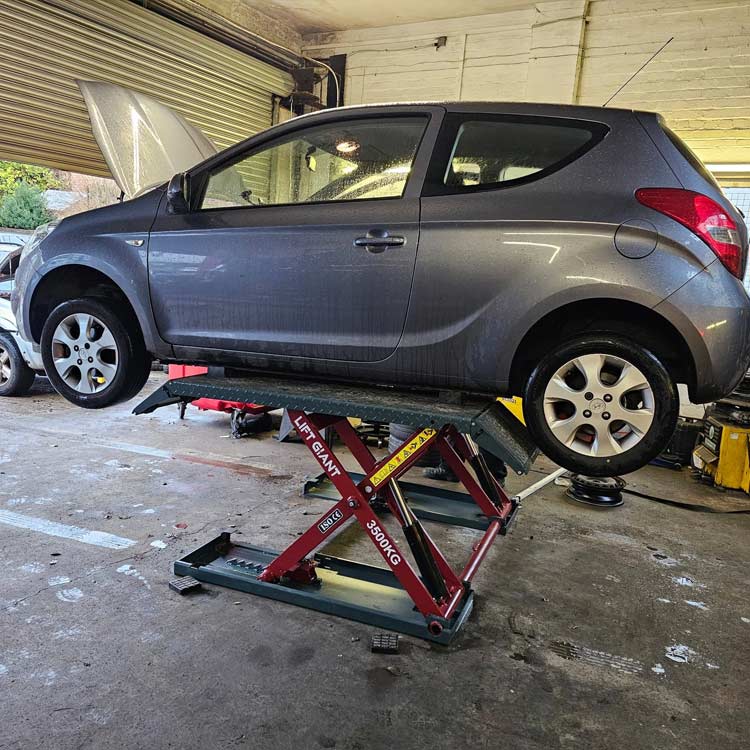
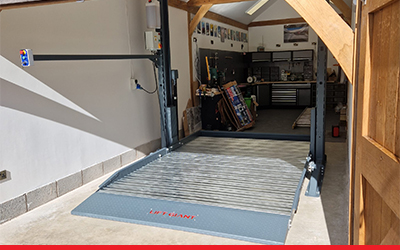
Sometimes customers are convinced they don’t have enough room for a lift when, after measuring everything properly, we find that a compact mid-rise scissor lift is actually an excellent fit.
Equally, there are occasions where I’d rather recommend a different model than sell somebody the wrong lift.
Getting the specification right is part of keeping the installation safe.
The Safety Features I Always Look For
There are certain features I’d expect to see on any quality vehicle lift.
These include:
- Mechanical safety locking systems
- Full CE compliance and Declaration of Conformity
- Reliable hydraulic components
- Stable lifting points
- High-quality steel construction
- Clearly marked lifting positions
- Overload protection where applicable
None of these features are particularly glamorous, but together they’re what gives you confidence every time the vehicle leaves the ground.
What Happens If the Power Goes Off?
This is another question that comes up regularly.
People imagine the lift suddenly dropping if there’s a power cut.
In reality, that’s not how quality vehicle lifts are designed.
Once the lift has been raised onto its safety locks, it’s mechanically supported. Losing electrical power doesn’t suddenly remove those locks.
The vehicle remains safely supported until the lift can be lowered correctly following the manufacturer’s procedure.
It’s another example of why understanding how a lift works is often enough to remove many of the concerns people have before buying one.
A Good Warranty Says a Lot About a Lift
Something else we always tell customers to look at is the warranty.
Not because you’re expecting something to go wrong, but because it tells you how much confidence the manufacturer has in the product.
Lift Giant offers one of the most comprehensive warranty packages available.
For lifts installed and serviced by Lift Giant every 12 months, customers receive a five-year parts and labour warranty.
Customers who choose to install the lift themselves still benefit from a five-year structural warranty, alongside a two-year warranty covering other lift components.
That level of cover reflects confidence in the quality of the equipment, while also recognising the importance of correct installation and regular servicing.
Looking After Your Lift
Like any piece of workshop equipment, a vehicle lift benefits from routine maintenance.
Fortunately, there’s nothing particularly complicated about it.
Keeping the lift clean, inspecting moving parts, following the recommended service intervals and addressing any signs of wear early will all help maximise its lifespan.
We’ve seen well-maintained lifts remain in daily use for many years because their owners looked after them properly from the start.
Frequently Asked Questions
Are car lifts safe to work under?
Yes. A quality vehicle lift that has been correctly installed and maintained is designed to support vehicles safely while work is carried out underneath. Modern lifts use mechanical safety locking systems in addition to hydraulic lifting mechanisms.
What makes a vehicle lift safe?
A combination of factors contributes to safety, including quality engineering, recognised safety certification, mechanical locking systems, correct installation and regular maintenance. All of these work together to ensure the lift performs as intended.
Should I have my vehicle lift professionally installed?
Professional installation is always recommended. Correct positioning, suitable flooring, secure anchoring and proper commissioning all play an important role in ensuring the lift operates safely from day one.
What happens if there’s a power cut while my vehicle is on the lift?
Quality vehicle lifts are designed with mechanical safety locks, so the vehicle remains securely supported even if electrical power is lost. The lift can then be lowered safely using the manufacturer’s recommended procedure.
How often should a vehicle lift be serviced?
Service intervals vary depending on usage and the manufacturer’s recommendations, but regular inspections and annual servicing are good practice for maintaining both safety and reliability.