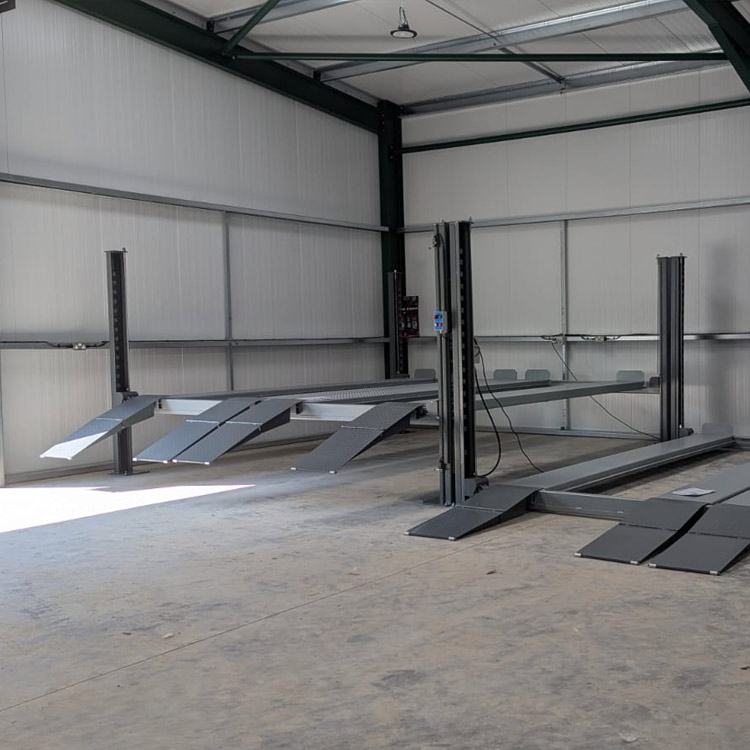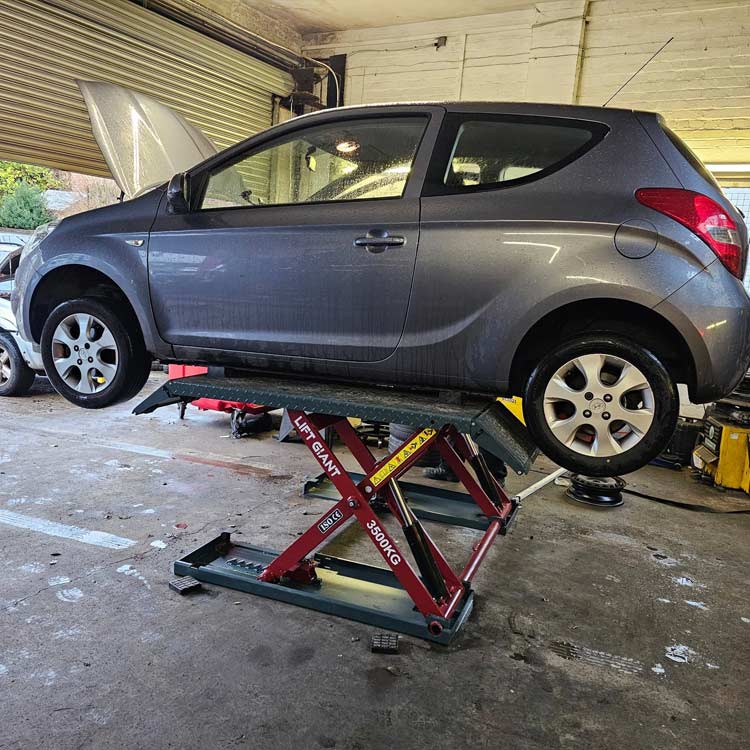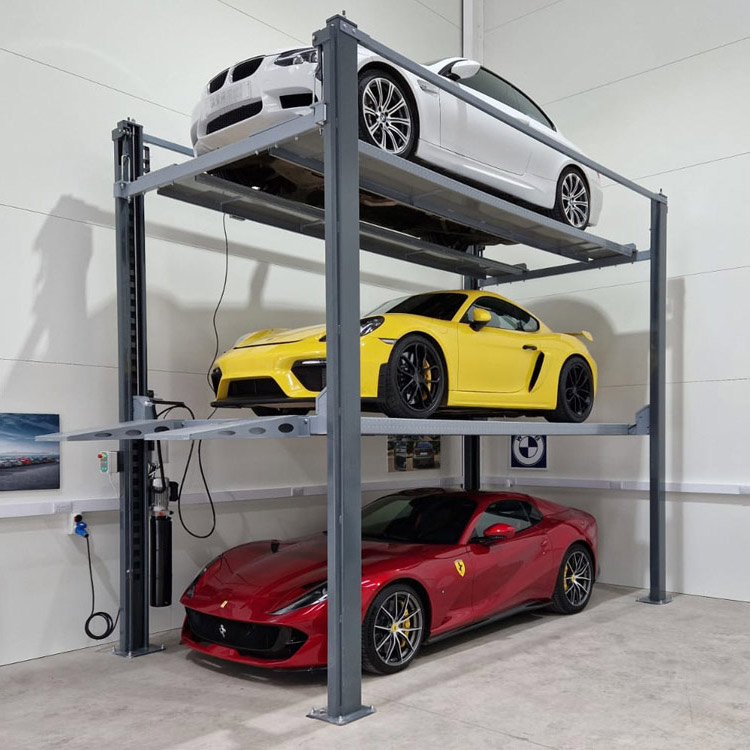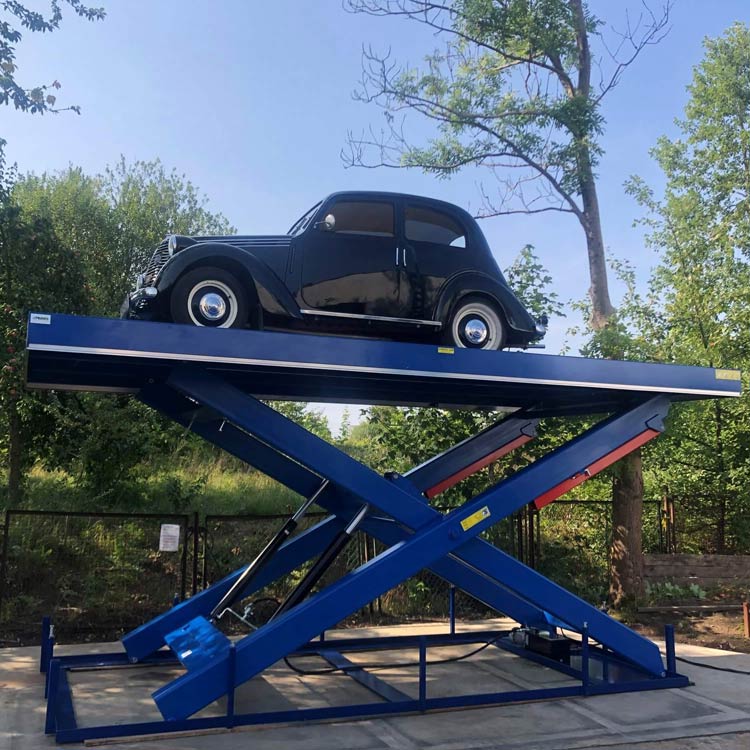
Whether you’re looking for car storage options or you want to be able to work on cars safely, a car lift is most definitely something to consider. Elevating the vehicle to a comfortable working height allows you to work on it safely and storing it above the ground frees up valuable floor space in your garage, so it’s a win-win.
If you’re considering a vehicle lift, then once you have decided which route you are going down, looking at how to get it installed is the next step. The prospect of tackling a DIY car lift installation to cut costs is undeniably tempting, but it comes with a crucial question: should you do it yourself, or leave it to professional car lift installers?
Key Summary
- DIY vs Professional – Self-installation is possible for competent mechanics, but using experienced car lift installers helps ensure safety, correct installation and compliance with the manufacturer’s requirements.
- Garage Floor Requirements – Requires a flat, solid concrete slab meeting the specific thickness and strength requirements of your chosen lift.
- Electrical Requirements – Power units may run on either 230V single-phase or 400V three-phase supplies, depending on the model. Wiring should be handled by a qualified electrician.
- Timeframe – Professional setups can take several hours, while a DIY build may take one to two days, depending on the lift and installation conditions.
DIY Car Lift Installation vs. Professional Installation
Whether to hire professionals or self-install your new car lift is a big decision, each with their own pros and cons. Of course, before you decide to go down the route of DIY car lift installation, you should consider your own skills and abilities. Although many people are perfectly capable of such a big job, if you haven’t worked on similar projects before it might be something that you struggle with. On top of that, you’ll also need specialised tools and heavy-lifting gear to get things installed safely and efficiently.
On the other hand, hiring experienced car lift installers helps ensure that the lift is installed in accordance with the manufacturer’s instructions and relevant safety requirements, with the posts correctly positioned and level. Professional installation also takes the hassle out of handling heavy components.
If you would prefer to leave the installation to the experts, Lift Giant’s delivery and installation services can help you arrange a suitable installation option for your vehicle lift.
How Lift Giant Supports DIY Fitters
If you do decide to install a car lift on your own then you’ll be glad to know that Lift Giant will help you as much as possible, to ensure the process goes as smoothly as possible for you.
Flexible Purchase Options – You can choose supply and installation by approved engineers, or opt for collection or delivery for self-installation, depending on the product and available service options. Explore the Lift Giant delivery and installation options to find out more.
Technical Support – If you hit a snag during self-installation, contact Lift Giant to discuss the support available for your chosen lift, including questions about assembly and setup.
Warranty Considerations – Keep in mind that warranty terms and coverage can vary depending on whether the unit is self-installed or professionally fitted, so always check the specific terms for your chosen model before starting.
Essential Car Lift Installation Requirements
Whether you’re going for professional car lift installation or installing it yourself, there are some car lift requirements that you must pay attention to, to ensure that things run smoothly and that your car lift is safe and meets any applicable UK installation requirements.
Garage Floor Requirements – Your concrete pad must be solid, level, and structurally suitable. Concrete depth and strength requirements vary between lift models. Check the manufacturer’s specifications before purchasing or installing a lift, and make sure the slab is suitable for the lift’s anchor loads. The surface should be free from significant cracks or damage around anchor points.
Car Lift Electrical Requirements – The hydraulic power unit requires a suitable power supply. Depending on the model, home garages may use a 230V single-phase supply, while some commercial lifts require a 400V three-phase connection. Check the electrical specifications for your chosen lift. All electrical wiring and isolator switches should be installed or checked by a qualified electrician.
Overhead Clearance & Equipment – You need sufficient ceiling height, factoring in both the post height and the raised vehicle. You may also need specialist tools, including a rotary hammer drill, suitable anchor bolts, a torque wrench, the specified hydraulic fluid, and engine cranes or lifting tackle to safely manoeuvre heavy steel columns.
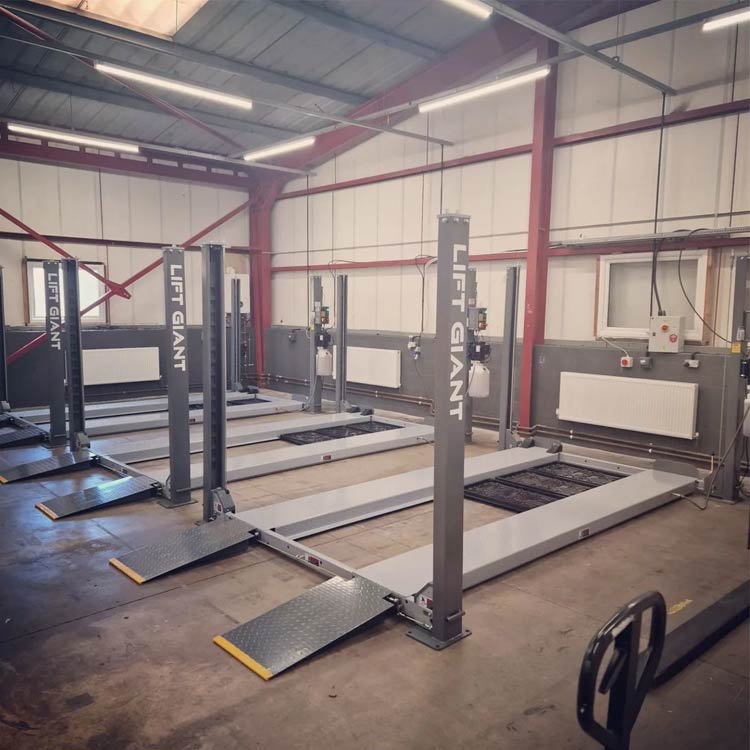
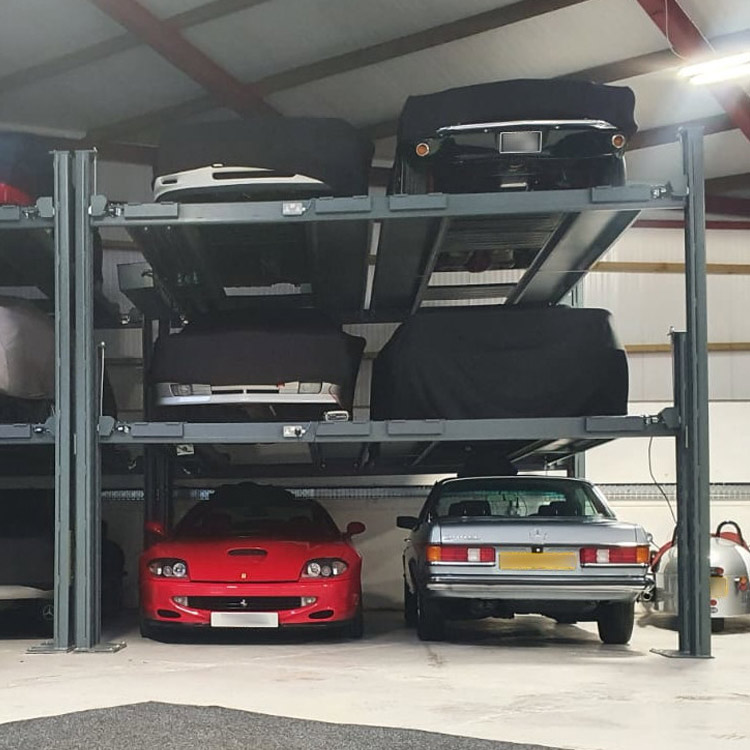
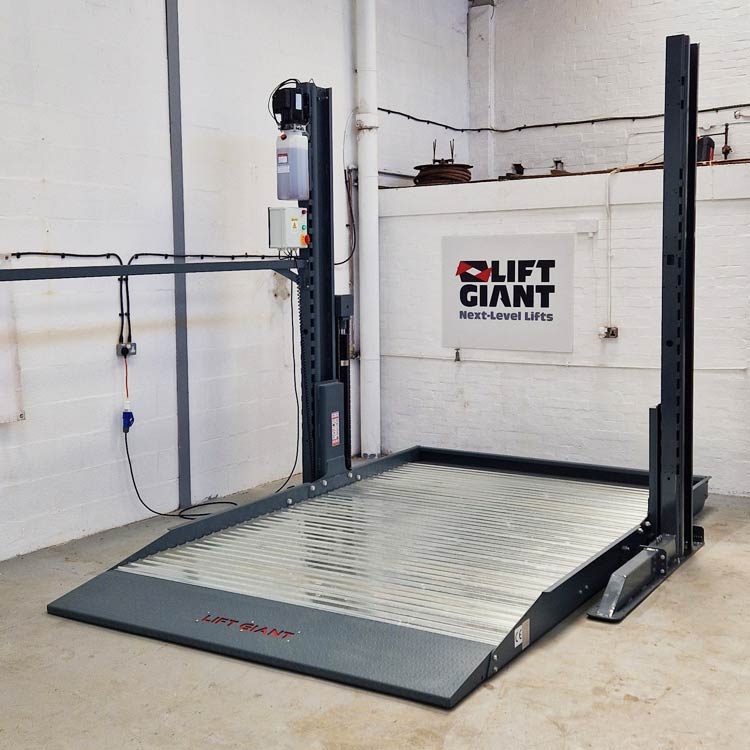
Before choosing your lift, compare the specifications of suitable models. For example, Lift Giant’s standard four-post parking lift and two-post parking lift have different designs and installation requirements, so it is important to check the technical information for the exact model you intend to buy.
Timeframes & What to Expect
How long things will take depends massively on whether you are tackling the task yourself or hiring professional help. Professional installation times vary according to the lift type, site conditions and preparation required. A straightforward installation may take several hours, while installing a car lift yourself can take a couple of days, depending on your skill set and the equipment available.
Side note: If your garage floor requires a new concrete pad to meet the lift manufacturer’s requirements, allow sufficient time for the concrete to cure before drilling anchor bolts. The required curing period depends on the concrete specification and site conditions, so follow the guidance provided by the concrete supplier and lift manufacturer rather than assuming a fixed timeframe.
Installing a vehicle lift transforms what you can achieve in your garage, but choosing between a DIY car lift installation and hiring professional car lift installers ultimately comes down to your experience, tools, and confidence. While a self-installation may save money upfront, it requires strict adherence to the manufacturer’s installation instructions, suitable floor and electrical preparation, and appropriate heavy-duty equipment.
If you are still deciding which type of lift to buy, take a look at Lift Giant’s range of two-post parking lifts and four-post parking lifts. If you need help deciding on a suitable model or installation option, you can also explore Lift Giant’s services.
Can You Install a Car Lift Yourself? – FAQs
Can I install a car lift myself?
Yes, if you have strong mechanical skills, suitable heavy lifting equipment, and the experience required to follow the manufacturer’s installation instructions. However, a DIY car lift installation carries significant risks. Misaligned posts, incorrectly tightened anchor bolts, or improper wiring can lead to severe injury or vehicle damage. Self-installation may also affect your manufacturer warranty or garage insurance, depending on the applicable terms. If in doubt, hire professional car lift installers.
What does a car lift need to be installed?
A proper installation requires:
- Garage Floor Requirements – A flat, structurally sound concrete slab that meets the specific depth and strength requirements of the lift.
- Car Lift Electrical Requirements – A suitable power supply, typically 230V single-phase for some domestic lifts or 400V three-phase for certain commercial models.
- Overhead Clearance – Sufficient height for the lift columns plus the raised vehicle.
- Tools & Supplies – Suitable anchor bolts, a rotary hammer drill, a torque wrench, the specified hydraulic fluid, and appropriate lifting gear.
Always check the installation manual and technical specifications for your particular lift before starting work.
How long does it take to install a car lift?
Installation time depends on the lift model, site preparation and the experience of the people carrying out the work. A straightforward professional installation may take several hours, while a DIY installation can take one to two days. If you need to pour a new concrete pad first, allow the concrete to reach the strength required by the lift manufacturer before anchoring the lift.