Gone are the days when a select few owned an electric car. Instead they have increased in popularity over recent years, which means that they are now an everyday occurrence on UK roads. With their popularity rising, it stands to reason that workshops, garage owners and even electric car owners need to make sure they have the equipment and experience to handle them safely.
One of the most common questions mechanics and enthusiasts ask is whether a standard vehicle lift can support an EV without risk of damage or structural failure. The answer is yes, but lifting an electric car involves distinct technical considerations—from managing substantial battery mass to protecting delicate underbody components.
Key Summary
- Yes, EVs can be lifted – You can safely raise an electric car on a vehicle lift, provided the lift meets specific weight and structural requirements.
- Weight is the primary factor – Electric vehicles are significantly heavier than traditional internal combustion engine (ICE) cars due to heavy battery packs, requiring higher-capacity lifts.
- Strict lifting points – EVs feature reinforced, precise jacking points to prevent costly or hazardous damage to battery trays and high-voltage cables.
- Choosing the right lift type – 2-post car lifts, 4-post car lifts, and scissor lifts can all support EVs, provided they offer sufficient lifting capacity and clear access to undersurface jacking areas.
Are Electric Cars Too Heavy for Standard Lifts?
When considering the weight of electric cars, it is important to remember that they weigh more than petrol and diesel cars because of their massive lithium-ion battery packs. That doesn’t mean that a car lift is unsuitable; it’s just a matter of making sure you invest in the right setup, ensuring that the lift you invest in has a big enough capacity to lift the car in question. A standard 2.5-tonne capacity lift might easily handle a traditional hatchback, but a modern electric SUV can easily push past 2.5 to 3 tonnes.
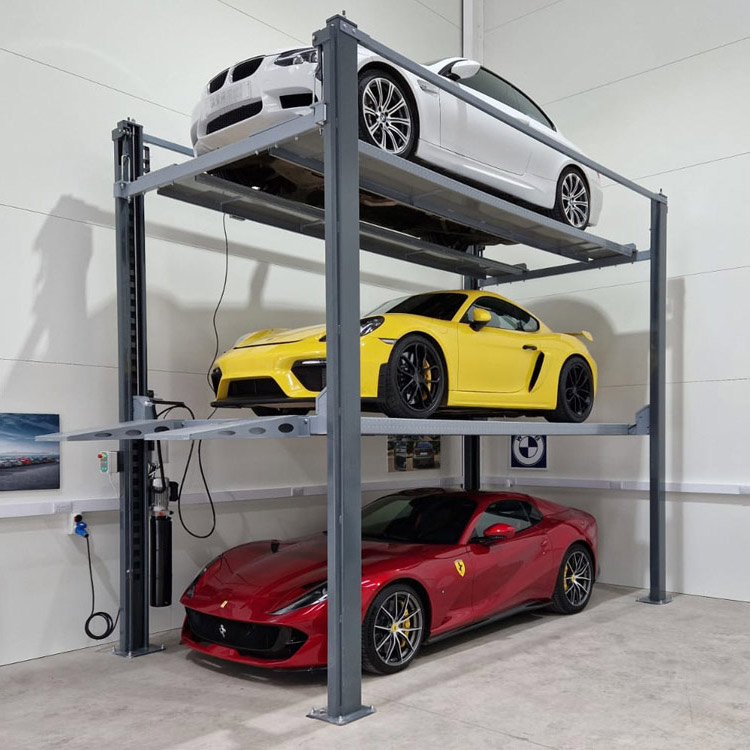
You should also bear in mind that battery placement alters the vehicle’s centre of gravity (CoG); EVs create a unique asymmetric load distribution across the lift arms. Before racking any EV, workshop technicians must verify the vehicle’s kerb weight against the lift’s rated Safe Working Load (SWL) and ensure proper mechanical arm locking mechanisms, making heavy-duty 2-post or 4-post car lifts with 4-tonne to 5.5-tonne weight capacities essential for servicing modern electric vehicles.
Identifying EV Vehicle Lifting Points: Protecting the Battery Pack
Unlike conventional petrol and diesel vehicles with broad underbody jacking zones, electric vehicles integrate structural, high-voltage Rechargeable Energy Storage System (RESS) enclosures that span the majority of the lower chassis floor. Placing lift arm carriage pads directly against the battery casing or skid plate can cause catastrophic structural deformation, puncturing internal cells and risking a hazardous thermal runaway event.
Correct vehicle lifting points on an EV are strictly restricted to OEM-specified, reinforced unibody structural sills positioned clear of the perimeter battery tray. Consequently, using specialised heavy-duty rubber blocks, polyurethane pad adapters, and height-extension sleeves is critical to maintain essential underbody clearance and achieve secure, clean load-bearing contact without compressing delicate high-voltage wiring harnesses or plastic undertrays.
Which Type of Car Lift is Best for Electric Vehicles?
Choosing the right EV car lift depends heavily on the type of maintenance being performed:
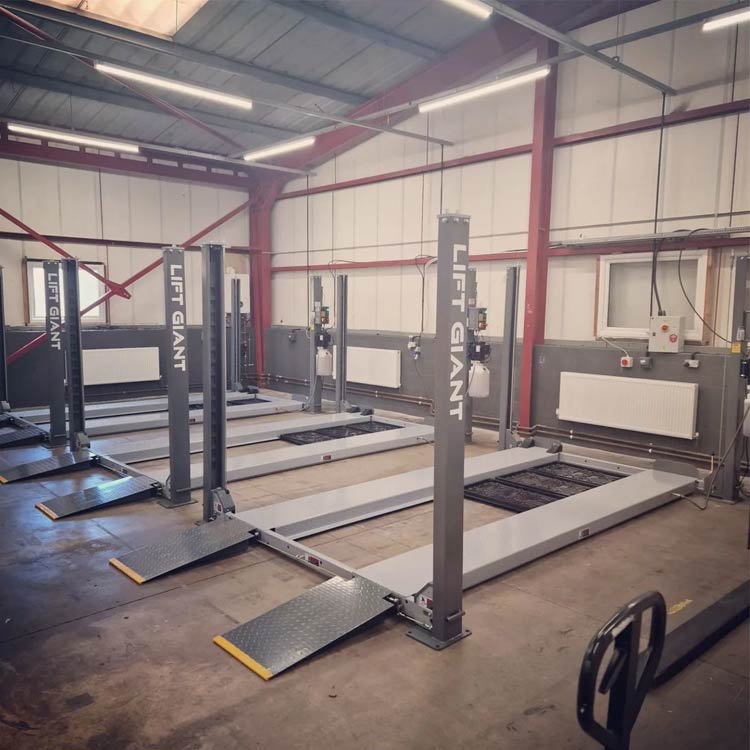
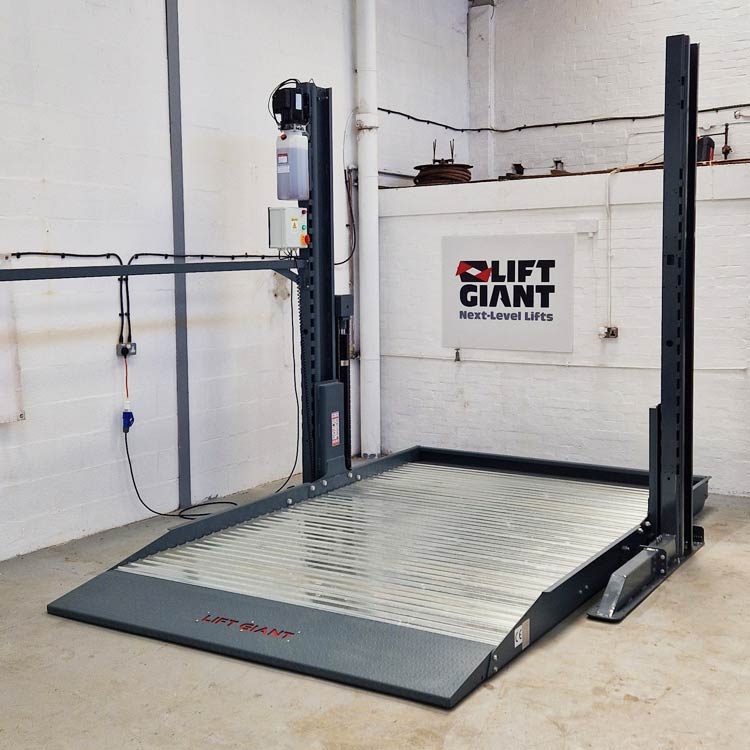
- 2-Post Car Lifts – Highly recommended for battery dropping, wheel, and brake service, as they offer completely clear access to the underside of the chassis.
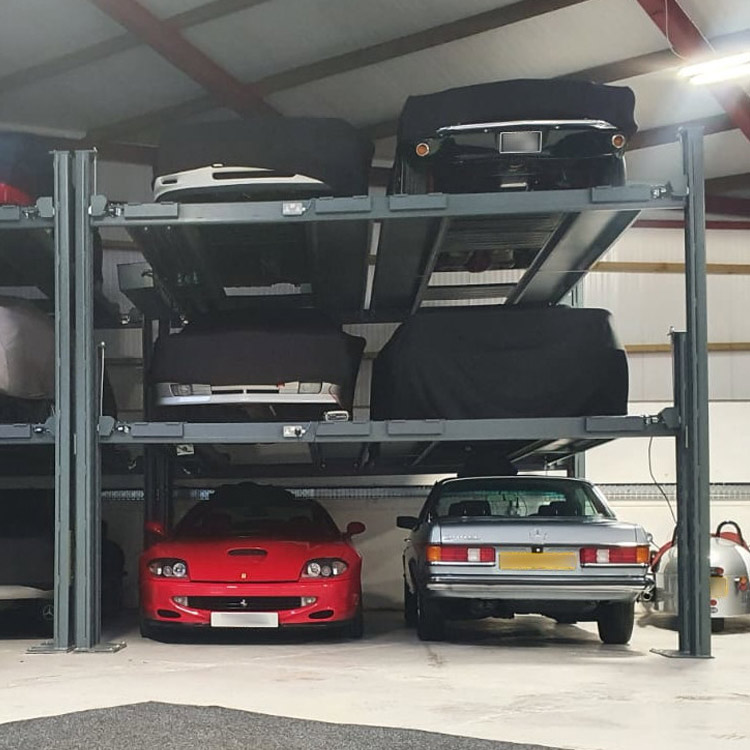
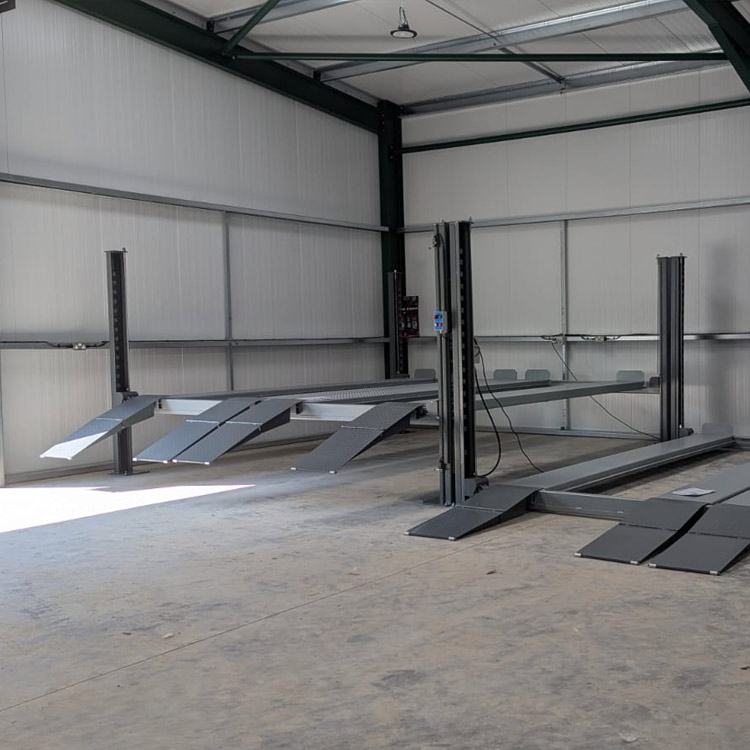
- 4-Post Car Lifts – Ideal for quick routine inspections, MOT checks, and wheel alignments, offering exceptional stability for heavy EV chassis.
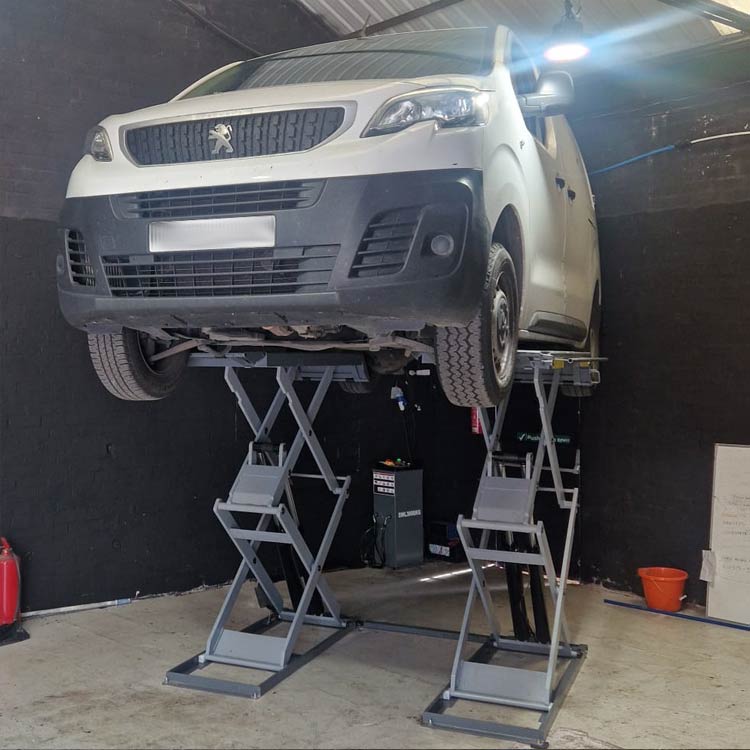
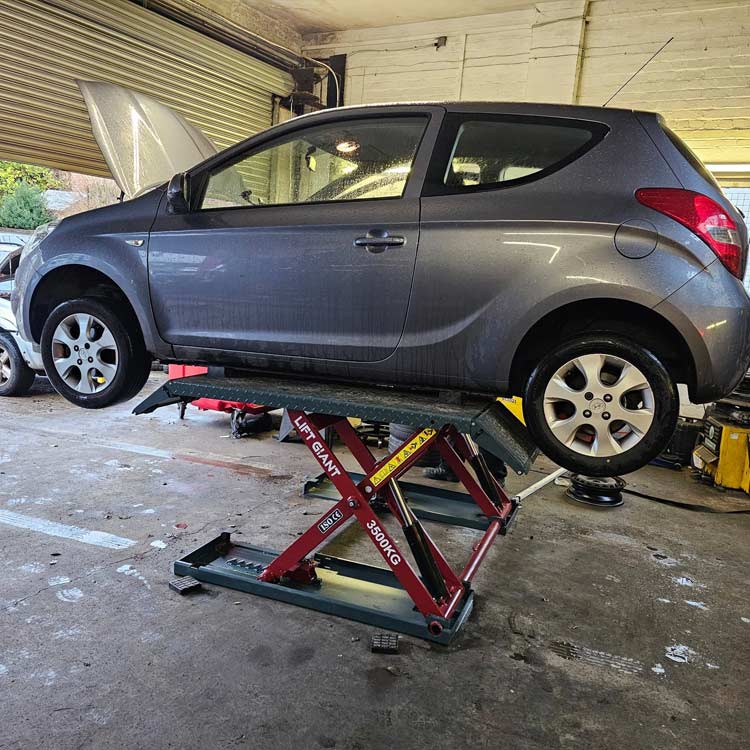
- Scissor Lifts – Great for space-saving workshops conducting general maintenance, provided the lift platforms or drive-on ramps accommodate the wider track widths and precise lifting pad locations of heavier EVs.
Essential Safety Best Practices
It might seem complex, but actually once you understand the difference between standard cars and electric cars in terms of weight, balance and underbody, it becomes really straightforward.
By investing in high-capacity lifting equipment, using designated jacking points, and adhering to robust workshop safety practices, garage professionals and homeowners with car lifts can comfortably service or store any electric vehicle safely and securely.
Can I Put an Electric Car on a Car Lift? – FAQs
Can you put an electric car on a car lift?
Yes, you can safely put an electric car on a car lift. However, you must ensure that the lift’s weight capacity exceeds the vehicle’s total weight and that the lifting arms or pads engage strictly with the manufacturer’s designated vehicle lifting points to avoid damaging the battery tray.
Are electric cars too heavy for a car lift?
Electric cars are not too heavy for car lifts, but they are noticeably heavier than equivalent petrol or diesel models due to their battery packs. While standard light-duty lifts (2.5 to 3 tonnes) may handle smaller electric hatchbacks, heavier EVs—such as electric SUVs and commercial vans—often require a higher-capacity lift rated at 4 tonnes or above.
Where are the lifting points on an electric vehicle?
The lifting points on an electric vehicle are located along the reinforced structural chassis sills, usually just behind the front wheels and ahead of the rear wheels. Unlike traditional cars, EV lifting points are strictly defined to prevent lifting pads from contacting the flat battery enclosure that runs along the bottom centre of the vehicle. Always consult the vehicle manufacturer’s manual for exact lifting locations.